
Why Choose an Electric Tricycle for Your Business?

Why Choose an Electric Tricycle for Your Business?

Urban delivery is changing quickly. The International Energy Agency’s Global EV Outlook 2024 reported nearly 14 million electric cars sold worldwide in 2023. This wider shift shows that businesses increasingly value efficient, lower-emission transport. However, an Electric Tricycle offers a different solution. It combines electric assistance, cargo capacity, and a compact footprint for short commercial routes.

BloombergNEF’s Electric Vehicle Outlook 2024 identifies two- and three-wheelers as one of the world’s largest electric vehicle segments. That finding matters for retailers, couriers, farms, and mobile service teams. A typical vehicle can move through narrow streets, stop beside a customer, and carry practical loads without occupying a full parking space. Its battery may also reduce fuel spending and local exhaust emissions. Small gains can matter.

Still, the business case is not automatic. Payload weight, battery range, charging access, road quality, weather, and local regulations require careful testing. The U.S. Department of Energy recommends evaluating vehicle duty cycles and operating costs before adopting alternative fuels. That principle applies here. A route with 40 daily stops may reward an electric tricycle, while steep roads and heavy cargo may expose its limits.

Real experience should guide the purchase. Measure delivery time, charging frequency, maintenance visits, and driver comfort for several weeks. The numbers may disappoint at first. That is useful. Honest trials prevent attractive specifications from becoming expensive assumptions. This article examines where an Electric Tricycle creates measurable value, where it struggles, and how businesses can choose with greater confidence.
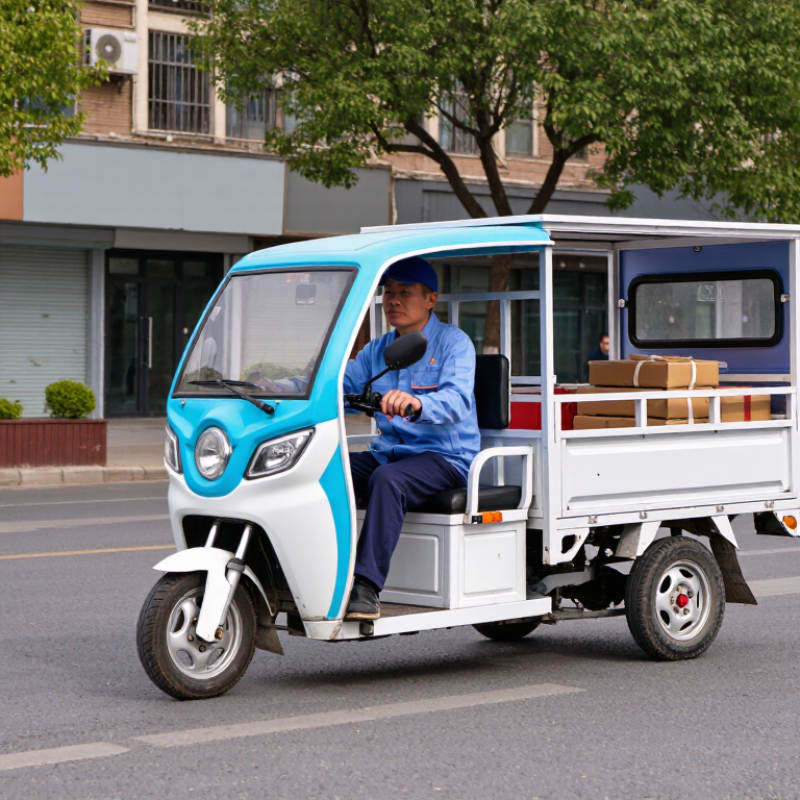
Why Choose an Electric Tricycle for Your Business?

What Is an Electric Tricycle for Business?

An electric tricycle for business is a battery-powered, three-wheeled vehicle designed to move people, tools, or goods. It usually combines a rear cargo box, flatbed, or enclosed compartment with an electric motor and rechargeable battery. Unlike a recreational tricycle, it is built around daily routes, payload limits, and repeated loading. Built for work, not recreation.

The International Energy Agency reported that global electric two- and three-wheeler sales approached 10 million units in 2023. This growth reflects practical urban demand, especially where short trips and traffic congestion reduce delivery efficiency. The World Economic Forum also projects a 78% increase in urban last-mile delivery demand by 2030.

A compact electric tricycle can serve nearby shops, campuses, markets, and service routes without needing a full-size van. It may fit through narrow streets and stop closer to customers.

Business suitability depends on details, not appearance. Operators should measure payload, hill performance, charging time, braking, weather protection, and battery range on real routes. A flat 20-kilometer route can feel very different from a steep route with frequent stops. The IEA notes that energy use varies with load, speed, and operating conditions. That matters. Poor loading can affect stability, while cold weather may reduce usable range. Many buyers underestimate maintenance and charging space. That mistake deserves careful review before fleet expansion.

How Electric Tricycles Support Commercial Operations

In commercial operations, an electric tricycle can turn short-distance transport into a predictable routine. Staff can move parcels, produce, tools, or recycling between storage rooms and nearby customers. Its three-wheel layout offers useful stability when stopping beside a curb or loading dock. That matters during busy shifts. A covered cargo area also protects goods from light rain and dust. However, capacity is not unlimited. Overloading changes braking distance and makes tight turns less controlled.

Operators should map routes before purchase. Measure doorways, ramps, slopes, and charging access. A vehicle that fits the street may fail inside a narrow warehouse. Battery range depends on payload, hills, temperature, and stop frequency. Real workplace trials are more reliable than advertised distance figures. In our experience, scheduled charging during staff breaks prevents rushed departures. Basic inspections should include tire pressure, brake response, lights, fasteners, and cargo restraints. Keep records. Small faults become expensive when ignored.

Electric tricycles can reduce fuel use and noise around markets, campuses, and facilities. They may also support predictable delivery windows with lower local operating costs. Yet productivity depends on training, weather planning, and secure parking. Rain, uneven surfaces, and cold temperatures still demand caution. Managers should compare total ownership costs, including electricity, maintenance, insurance, charging equipment, and downtime. One limitation deserves honesty: some teams expect instant savings, but poor route planning can erase them. A careful pilot with measured results gives better evidence than enthusiasm alone.

Key Business Benefits of Using an Electric Tricycle

Why Choose an Electric Tricycle for Your Business?

An electric tricycle can reduce daily delivery costs without demanding a large vehicle. Its compact frame moves easily through narrow streets, loading areas, and busy commercial districts. A lockable cargo box can carry groceries, tools, parcels, or prepared meals. Operators often appreciate the quiet motor during early deliveries. Customers notice that, too. Lower noise creates a more pleasant service experience.

The business benefits become clearer with regular use. A rechargeable battery can replace frequent fuel purchases, while routine servicing is usually simpler than maintaining a larger vehicle. Electric assistance also reduces physical strain on riders, especially when carrying heavier loads or climbing moderate slopes. However, the vehicle is not perfect. It needs planned charging, secure parking, and careful weight distribution. Poor route planning can quickly reduce productivity. In cold weather or on steep roads, battery performance may also change.

Tips: Test the tricycle on your real delivery route before purchasing. Measure doorways, ramps, storage spaces, and turning areas. Keep the load centered and below the recommended capacity. Charge the battery after each shift when possible. Record distance, charging time, maintenance needs, and delivery speed for several weeks. These details reveal the true operating cost better than a sales estimate. A short trial may also expose problems that a showroom visit hides.

Why Choose an Electric Tricycle for Your Business?

Electric tricycles can reduce urban delivery energy costs because they use substantially less energy than gasoline-powered commercial vehicles. The comparison below uses representative operating assumptions: 2 kWh of electricity per 100 km for an electric tricycle and 8 L of gasoline per 100 km for a compact delivery vehicle.

Estimated energy cost per 100 km: electricity at $0.16/kWh and gasoline at $1.00/L. Actual costs vary by vehicle, route, load, traffic, and local energy prices.

How to Choose the Right Electric Tricycle

Why Choose an Electric Tricycle for Your Business?

Choosing the right electric tricycle starts with the work, not the appearance. Measure your usual load, route length, road surface, and parking space. A small cargo box may suit bakery deliveries, while a wider platform helps with tools or produce. Check the rated payload carefully. Overloading can reduce braking control and shorten battery life.

Battery capacity matters, but range figures are only estimates. Cold weather, hills, tire pressure, and frequent stops can change daily performance. Ask for tested range under conditions similar to your route. Consider charging time and whether your workplace has a safe electrical outlet. A removable battery can help, although carrying one upstairs may become tiring.

Look closely at brakes, lighting, mirrors, frame strength, and weather protection. Hydraulic or mechanical brakes should match the expected load and terrain. Confirm local rules for speed, dimensions, lighting, and road use before purchase. Service access is equally important. Can a technician inspect the motor and replace tires quickly?

I once underestimated turning space.

That mistake matters.

Create a simple route trial before deciding. Load the tricycle with realistic weight, ride over slopes, and test tight corners. Listen for unusual motor noise and check whether the riding position causes wrist or back strain. No checklist is perfect, and real use may expose problems that specifications hide.

Costs, Maintenance, and Safety Considerations

Why Choose an Electric Tricycle for Your Business?

An electric tricycle can lower delivery costs when daily routes are short, frequent, and predictable. Charging usually costs less than fuel, but battery replacement can change the calculation. Purchase price, insurance, permits, electricity, tires, and financing should enter the budget. I once underestimated the cost of charging during peak electricity hours. That small oversight affected the monthly forecast. Track mileage, charging time, payload, and repair expenses before expanding the fleet.

Maintenance is simpler than maintaining a combustion vehicle, but it is not maintenance-free. Inspect brakes, tires, lights, steering joints, and cargo fasteners every week. Keep battery connectors dry and check for unusual heat after charging. A technician should examine electrical faults rather than guessing with household tools. Cleaning the frame prevents grit from wearing moving parts. Spare tubes and brake pads can reduce downtime. Still, maintenance schedules vary with hills, weather, and load weight.

Safety deserves equal attention to operating cost. A loaded tricycle needs more distance to stop, especially on wet pavement. Train riders to slow before corners and keep both hands available. Secure boxes so shifting cargo does not affect balance. Use visible lighting and reflective clothing during low-light deliveries. Check local traffic requirements before using public roads. Protective equipment helps, but it cannot correct excessive speed or an overloaded cargo bed. Practice routes with an empty vehicle first. Mistakes appear earlier there.

Why Choose an Electric Tricycle for Your Business? - Costs, Maintenance, and Safety Considerations

Business Consideration Typical Electric Tricycle Data Business Benefit Planning Notes
Initial purchase cost Approximately US$2,000–US$8,000 for a new commercial model, depending on battery capacity, cargo body, motor, and equipment. Lower entry cost than most commercial vans and many specialized delivery vehicles. Compare total ownership cost, warranty coverage, payload capacity, and local registration requirements—not only the purchase price.
Energy cost Many models consume roughly 1.5–3.5 kWh per 100 km. At US$0.15 per kWh, energy costs are about US$0.23–US$0.53 per 100 km. Electricity is usually substantially cheaper per kilometer than gasoline or diesel for short urban delivery routes. Actual cost depends on electricity tariffs, charger efficiency, terrain, payload, weather, and driving style.
Battery range Common claimed ranges are approximately 40–120 km per charge; practical range can be lower under heavy loads or frequent stops. Suitable for local deliveries, campus transport, market distribution, maintenance work, and neighborhood services. Select a battery with at least 20% reserve beyond the planned daily route to reduce range-related interruptions.
Charging time Typically 6–10 hours with a standard charger; some systems support faster charging or battery swapping. Overnight charging can support a full working day without fuel-station visits. Confirm charging-voltage compatibility, installation requirements, and whether charging can occur at the depot.
Routine maintenance Regular checks include tires, brakes, steering, suspension, lights, fasteners, charging connectors, and battery condition. Electric drivetrains have fewer engine-related service items, such as oil changes, spark plugs, and exhaust components. Brake and tire wear may increase when vehicles operate at maximum payload or on hills.
Battery replacement planning Many lithium-ion batteries are commonly planned for approximately 3–7 years of service, depending on chemistry, cycles, heat, and charging habits. Predictable battery planning helps businesses budget for long-term fleet operation. Review the battery warranty, cycle rating, replacement price, recycling process, and availability of spare batteries.
Payload capacity Commercial cargo models commonly carry about 150–500 kg, although capacity varies significantly by frame and configuration. Adequate for parcels, groceries, tools, food-service supplies, and light industrial materials. Never exceed the certified gross vehicle weight; include the driver, cargo, accessories, and battery in load calculations.
Operating speed Many utility models are designed for approximately 25–45 km/h, subject to local regulations and vehicle classification. Moderate speeds improve maneuverability and suit dense urban routes with frequent stops. Verify speed limits, road access, licensing, helmet, insurance, and registration rules in each operating area.
Safety equipment Recommended equipment includes hydraulic or mechanical disc brakes, front and rear lights, reflectors, mirrors, horn, seat belts where fitted, and a parking brake. Better visibility and braking control reduce operational risk in traffic and during frequent loading stops. Choose models with a stable frame, a low center of gravity, reliable load restraint, and tested rollover resistance where available.
Weather and terrain impact Rain, cold temperatures, hills, soft surfaces, strong wind, and heavy loads can reduce range and increase stopping distance. Route-specific vehicle selection improves reliability and reduces unexpected downtime. Use weather protection, suitable tires, cargo covers, and conservative range estimates for demanding routes.
Noise and local operations Electric motors produce very low operating noise compared with combustion engines, although tire and warning sounds remain. Useful for residential deliveries, hospitals, campuses, resorts, warehouses, and early-morning operations. Because electric vehicles are quieter, operators should use lights, mirrors, horns, and extra awareness around pedestrians.
Best business fit Short-distance routes with predictable daily mileage, frequent stops, limited cargo volume, and access to overnight charging. Can lower energy and routine service costs while improving access to narrow streets and pedestrian-oriented areas. Less suitable for long highway travel, very heavy loads, steep terrain, or operations without dependable charging access.

Planning basis: Figures are typical industry ranges for small commercial electric tricycles and are provided for preliminary budgeting. Actual specifications, operating costs, safety requirements, and legal obligations vary by vehicle configuration, location, route, climate, and local regulations.

Contact Details

Address:

Solar Pump Solutions,
Borrisokane, Co. Tipperary, Ireland.

Phone:

+353 86 1216312

Email:

sale@desasolar.com

Connect with us

Scroll to Top
Solar Pump Solutions
Privacy Overview

This website uses cookies so that we can provide you with the best user experience possible. Cookie information is stored in your browser and performs functions such as recognising you when you return to our website and helping our team to understand which sections of the website you find most interesting and useful.