7 Best Solar Electric Suppliers for Global Buyers?

Choosing a Solar Electric supplier across borders involves more than comparing panel prices. Buyers must check product warranties, inverter compatibility, shipping terms, technical support, and local service capacity. A low quote can look attractive until replacement parts take weeks to arrive. Small details matter.

IRENA Director-General Francesco La Camera has said, “Renewable power is the cheapest source of new power generation in most parts of the world today.” That broader trend makes supplier quality even more important: equipment performance and dependable support shape a project’s value over time. This guide examines seven suppliers often considered by global buyers, while recognizing that availability, certifications, and service vary by market. A company with a strong international profile may still be a poor fit for a remote site or a small commercial installation. Not every buyer needs the same system.

The comparisons focus on practical evidence: product range, warranty clarity, manufacturing and distribution reach, and support after delivery. Buyers should confirm current specifications and terms directly with each supplier, since offerings change. They should also ask who handles warranty claims and where replacement components are stocked. A brochure cannot answer everything. No shortlist is perfect, and supplier rankings can shift as markets and logistics change. Use these profiles as a starting point, then match each option to your project’s location, budget, and maintenance capacity.
7 Best Solar Electric Suppliers for Global Buyers?

What Makes a Solar Electric Supplier Suitable for Global Buyers

For global buyers, a solar electric supplier must do more than offer competitive pricing. It should provide clear technical datasheets, traceable product specifications, and test reports that match the equipment being shipped. Check that panel, inverter, and battery details remain consistent across the quotation, packing list, and installation documents. Small discrepancies can delay customs checks or complicate commissioning. Paperwork matters.

Reliable suppliers explain how products perform in local conditions. A system designed for a cool, dry site may need different protection in coastal heat, dust, or heavy seasonal rain. Confirm operating temperature ranges, enclosure ratings, connector compatibility, and available service support. Review warranty terms, replacement procedures, and who pays freight for faulty parts. These details are easy to overlook.

Communication is part of technical quality. A capable team answers questions plainly, shares realistic lead times, and flags limitations instead of promising perfect output. Request references from projects with similar climates and system sizes, then verify them where practical. Independent inspections can help, though they add time and cost. No checklist catches every mismatch. Comparing samples with shipment documents before approving a large order may reveal issues that a polished quotation misses.

Seven Leading Solar Electric Suppliers and Their Core Strengths

Solar buyers often compare module prices first. That is understandable, but incomplete. IRENA’s Renewable Capacity Statistics 2024 reports that global solar capacity reached about 1,419 GW by the end of 2023, after roughly 347 GW of additions that year. Such rapid growth makes supplier capability, delivery schedules, and product documentation important—not merely headline efficiency.

Seven supplier profiles offer distinct strengths. Integrated manufacturers can coordinate modules and system components. High-efficiency module specialists help buyers with limited roof area. Inverter-focused suppliers provide conversion equipment and monitoring tools. Storage-integrated providers combine batteries with solar systems. Utility-scale engineering firms manage large projects and grid connections. Rooftop distributors support smaller orders and local stock. Regional service partners offer installation guidance and after-sales support. Different strengths.

These categories overlap, and labels alone prove little. Ask for independently tested performance data, warranty terms, degradation assumptions, and shipping lead times. For a project near a salty coastline, corrosion testing matters; for a remote site, spare-parts access may matter more. IEA PVPS’s Trends in Photovoltaic Applications 2024 tracks the expanding global market, but growth does not guarantee consistent quality. Buyers should verify each supplier’s project references and technical records. A polished brochure is not evidence. Even experienced procurement teams can miss weak service coverage when comparing only equipment specifications.

Global Buyer Context: Solar PV Capacity Growth

Global installed solar PV capacity has expanded rapidly, increasing the importance of evaluating suppliers’ manufacturing scale, delivery capability, and long-term service support.

Global installed solar PV capacity, GW. Figures are rounded. Source: IRENA, Renewable Capacity Statistics 2025.

Product Quality, Technology, Certifications, and Production Capacity

For global buyers, supplier selection should begin with verifiable quality, not brochure claims. The IEA’s 2022 report, Solar PV Global Supply Chains, found that China held more than 80% of global manufacturing capacity across key solar-panel stages. This concentration makes traceability and backup sourcing worth checking. Ask for batch-level inspection records, factory audits, and independent test reports. A certificate is not a crystal ball.

Technology choices should match the project’s climate and installation conditions. Compare module efficiency, temperature coefficients, degradation rates, and performance under low light. Check that IEC 61215 design-qualification and IEC 61730 safety documents cover the exact model offered. Request the full test report, not just a certificate image. Details matter.

Production capacity must be demonstrated, not merely advertised. IRENA’s Renewable Capacity Statistics 2024 reports that solar PV added about 346 GW worldwide in 2023. That scale puts pressure on delivery schedules and quality controls. Buyers can request recent output records, lead times, and evidence of component traceability. Factory size alone proves little; utilization and inspection consistency matter too. I would still verify shipping promises against recent deliveries, because even careful suppliers can miss a schedule.

Pricing, Shipping, Warranty, and After-Sales Service Comparison

Choosing solar-electric suppliers for global orders takes more than comparing panel prices. Ask for an itemized quote covering modules, inverters, mounting hardware, packaging, and technical support. A low headline price can hide costly gaps. Confirm the currency, quote validity, minimum order, and payment milestones in writing. Get it in writing. Compare equivalent system sizes and output assumptions, or the price comparison may mislead.

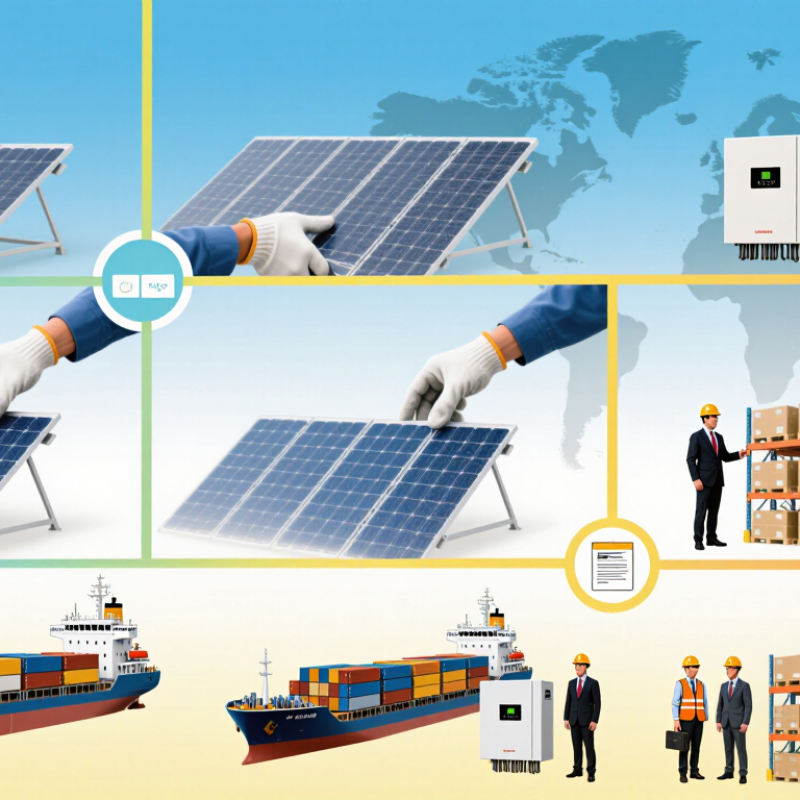
Shipping can change the real cost quickly. Check whether the quote includes export packing, port handling, freight, insurance, and final delivery. Ask for production and transit estimates, along with the documents supplied with the shipment. A container arriving after installation season may erase the value of a discount. Delivery dates are estimates, not promises. A spreadsheet can still miss awkward details.

Read warranty terms closely. Check coverage periods for panels and inverters, claim requirements, and who pays return freight or replacement labor. Ask whether local technicians can diagnose faults remotely and how quickly support typically responds. Keep serial-number lists, photos, and commissioning records to reduce delays. Written policies do not guarantee smooth service; that is worth remembering. Compare recent buyer references in your destination market, and pause if answers about service are vague.

How Global Buyers Can Select the Right Solar Electric Supplier

A reliable solar electric supplier should explain how its equipment fits your project, not just send a low quote. Compare panel output, inverter compatibility, temperature performance, and expected delivery dates. Ask for evidence. Request current product datasheets and test documentation, then check that model numbers match across the documents and quotation. Small mismatches can create delays later.

Global buyers also need clear answers about packaging, shipping terms, spare parts, and technical support across time zones. Ask who handles damage claims and how replacement components are arranged. A supplier’s response to specific questions can reveal more than a polished sales presentation. Still, a slow reply does not always mean poor service; holidays, language differences, and time zones can affect communication.

Review warranty coverage carefully. Check what it covers, how long claims may take, and whether labor or transport costs are excluded. Ask for references from projects with similar climates and installation conditions, where available. A supplier serving a coastal site may need to address salt exposure, while a hot inland location raises different questions. I would not choose on price alone, but the most expensive offer is not automatically the safest. Compare the full package, and keep unanswered questions visible before committing.

7 Best Solar Electric Suppliers for Global Buyers? — How Global Buyers Can Select the Right Solar Electric Supplier

Supplier profile Typical offering Best suited to What global buyers should verify Potential trade-off
Solar module manufacturer Photovoltaic modules, product documentation, and warranty terms. Utility-scale projects, commercial installations, and buyers sourcing modules in volume. Applicable IEC 61215 and IEC 61730 certification, independent test reports, product traceability, and written performance and product warranties. May not supply inverters, batteries, installation, or local after-sales service.
Inverter manufacturer String, hybrid, or other inverter equipment and system-monitoring tools. Buyers who have selected modules and need conversion equipment compatible with their grid or system design. Applicable IEC 62109 safety certification, grid-code compliance for the destination market, operating-temperature limits, and warranty support arrangements. Equipment compatibility and service access can vary across regions and system configurations.
Integrated solar system supplier A coordinated package that may include modules, inverters, mounting equipment, and storage. Buyers seeking a consolidated bill of materials and fewer equipment interfaces to manage. Component-level datasheets, system compatibility documentation, warranty responsibility for each item, and a complete packing list. A bundled offer may limit component choice; confirm that each item meets local requirements.
Solar equipment distributor or wholesaler Equipment from multiple manufacturers, with stock availability and order consolidation. Installers, resellers, and buyers who need mixed products or shorter sourcing channels. Proof of authorized distribution where relevant, actual stock status, batch and serial traceability, export documents, and return terms. Stock, pricing, and warranty handling may depend on the distributor’s agreements and local presence.
Engineering, procurement, and construction (EPC) provider Project design, equipment procurement, construction, commissioning, or a defined combination of these services. Commercial and utility-scale buyers that want a project delivery partner rather than equipment alone. Comparable project references, scope boundaries, local permits and grid-connection responsibilities, acceptance tests, and performance guarantees stated in the contract. Project outcomes depend on the contract scope, site conditions, local rules, and subcontractor arrangements.
Off-grid and remote-power specialist Solar equipment and system designs for applications without a dependable utility-grid connection. Remote facilities, rural electrification, telecommunications, and backup-power projects. Load assessment, autonomy assumptions, battery sizing, environmental ratings, and documented operating and maintenance requirements. System sizing is site- and load-specific; estimates based on incomplete consumption data can be misleading.
Solar-plus-storage supplier Solar equipment combined with batteries, battery controls, and related energy-management components. Buyers seeking backup power, self-consumption management, or storage-supported off-grid operation. Battery chemistry and usable capacity, system compatibility, applicable battery safety documentation such as IEC 62619, and UN 38.3 transport test documentation where applicable. Storage adds system-design, shipping, installation, and end-of-life considerations; confirm local rules and service capability.

Note: These are supplier profiles, not rankings of named companies. Certifications and regulatory requirements vary by product and destination market. Verify current certificates, warranty terms, shipping conditions, and local compliance directly before purchase.

Contact Details

Address:

Solar Pump Solutions,
Borrisokane, Co. Tipperary, Ireland.

Phone:

+353 86 1216312

Email:

sale@desasolar.com

Connect with us

Scroll to Top
Solar Pump Solutions
Privacy Overview

This website uses cookies so that we can provide you with the best user experience possible. Cookie information is stored in your browser and performs functions such as recognising you when you return to our website and helping our team to understand which sections of the website you find most interesting and useful.