What Are the Top Combination Sweeper Scrubber Suppliers?
Choosing a Combination Sweeper Scrubber is a practical decision, not just a comparison of brand names. A single machine must collect loose debris and wash the floor in one pass. On a warehouse aisle, that means handling dust, pallet fragments, and wet tire marks without leaving a damp trail. Supplier quality matters. So do service access, parts availability, operator training, and battery runtime.
Grand View Research’s Floor Cleaning Machines market analysis tracks demand for mechanized floor-care equipment and the factors shaping adoption. ISSA’s Cleaning Industry Management Standard (CIMS) also offers a useful framework for assessing cleaning providers’ management practices. These sources help frame the market, but they do not rank combination-machine suppliers. Buyers should verify model-specific claims through demonstrations, references, and written service terms. Reports have limits.
A practical buyer’s rule, paraphrasing sustainable-cleaning expert Steve Ashkin, is: “Judge equipment by verified results, not promises.” That is a useful test, though it cannot replace a site trial. Compare suppliers such as Tennant, Nilfisk, Kärcher, and Hako by matching machine width, water capacity, recovery performance, and support coverage to the actual facility. Ask each supplier to clean the same marked floor area, then inspect the edges and recovery tank. Small details count. A machine may look productive in a showroom yet struggle around tight racks or frequent stops. This outline examines leading suppliers, their strengths, and the questions buyers should ask before choosing a Combination Sweeper Scrubber.
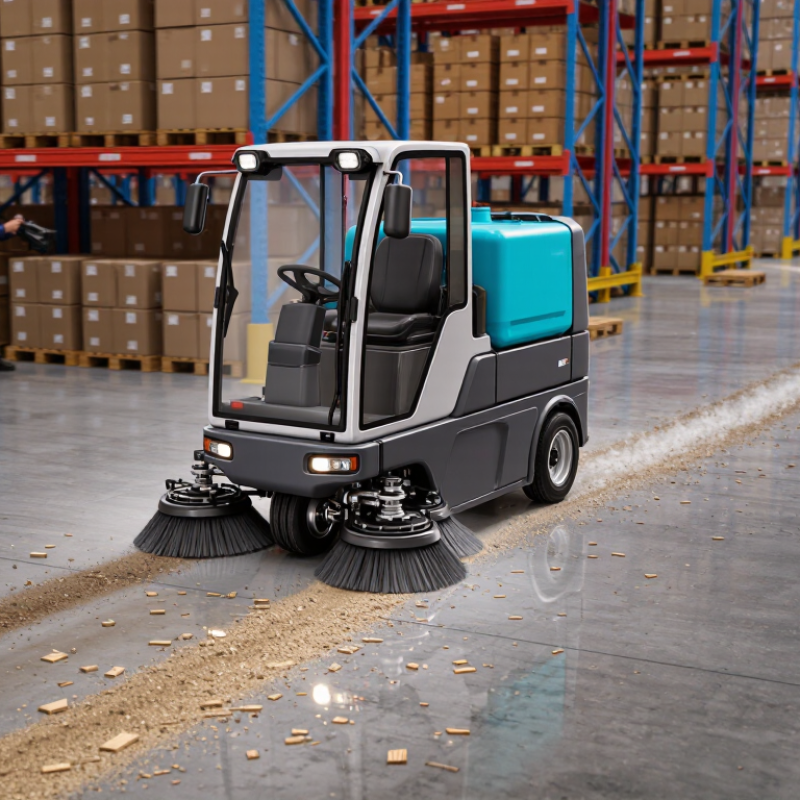
What Is a Combination Sweeper-Scrubber? How Its Two Cleaning Systems Work
A combination sweeper-scrubber brings two cleaning systems into one machine. The sweeping system collects loose material, such as grit, paper scraps, and dust, in a debris hopper. This keeps larger particles from spreading beneath the brushes. The scrubbing system then applies water and cleaning solution to the floor. Rotating brushes or pads loosen stuck-on soil.
The order matters. Sweep first, scrub second. During scrubbing, a rear squeegee guides dirty water toward a vacuum pickup, which sends it to a recovery tank. The floor is left damp rather than flooded, though drying time depends on the surface, solution, and machine settings. In a warehouse aisle, for example, the sweeper can capture small stones before the brushes encounter them. That can help reduce brush wear and messy streaks.
In practice, the sequence is not always neat. Heavy debris may need manual removal, and clogged filters or a worn squeegee can leave water behind. Operators should check both tanks, inspect the brushes, and match the cleaning path to the floor. A machine’s combined design saves passes, but it does not remove the need for careful setup. The trade-off is real.
How a Combination Sweeper-Scrubber Works
A combination machine brings together two cleaning systems. The sweeper collects loose debris, while the scrubber applies cleaning solution, agitates the floor, and recovers dirty water. Exact components and configurations vary by machine.
Which Suppliers Serve the Global Market? Tennant, Nilfisk, Kärcher, Hako, and IPC
Combination sweeper-scrubbers are sold through suppliers with different levels of global reach. Some manufacturers support customers across several regions, while local distributors handle demonstrations, delivery, and service. A broad sales map does not guarantee fast repairs. Coverage varies.
For buyers, the practical question is who will maintain the machine at the actual work site.
Ask about technician availability, spare-part stocks, training, and response times in writing. A unit cleaning a warehouse at night needs dependable support, not just an impressive specification sheet. Check whether the supplier can arrange a site trial on the same floor type and with similar debris. That matters.
Compare operating width, water capacity, battery runtime, and how easily brushes and filters can be replaced. These details affect daily output and downtime. Also ask how service works across borders, since support arrangements may differ between countries. A supplier may offer strong products but uneven local coverage; that is worth admitting, not overlooking. Request references from facilities with similar floor conditions, and confirm who handles warranty claims before signing.
How Is Theoretical Productivity Calculated? Cleaning Width × Speed × 1,000 m²/h
What Are the Top Combination Sweeper Scrubber Suppliers?
Theoretical productivity estimates the floor area a machine could cover under ideal conditions. Use cleaning width in meters × travel speed in kilometers per hour × 1,000 to calculate square meters per hour. For example, a 1.0-meter cleaning path at 6 km/h gives 6,000 m²/h. Simple arithmetic. But it is not a promise of real-world output. Turning, overlap, obstacles, and time spent emptying or refilling tanks all reduce coverage.
ISSA’s 612 Cleaning Times reference provides industry benchmarks for cleaning tasks, but machine estimates still need site-specific checks. Consider a warehouse aisle: a 1.0-meter scrubber moving at 6 km/h may look productive on paper, yet intersections and pallet edges slow each pass. Measure a representative route, including turns and stops, then compare the result with the theoretical figure. The gap matters. A supplier’s quoted rate should be treated as a maximum, not a daily target. Even careful estimates can miss small delays. That is worth questioning.
Which Specifications Matter? Cleaning Path in mm, Tank Capacity in L, and Runtime in h
A combination sweeper scrubber can look impressive on a specification sheet, but three numbers deserve a closer look: cleaning path in mm, tank capacity in L, and runtime in h. Cleaning path describes the width covered in one pass. A wider path may reduce passes across an open warehouse floor, yet it can make tight aisles and doorway turns awkward. Measure the narrowest route, not just the largest room. A few hundred millimetres can change how easily the machine works around shelving.
Tank capacity affects how often operators stop to refill or empty the machine. Compare both solution and recovery tank volumes; they are not always equal. A large solution tank is less useful if the recovery tank fills much sooner. Runtime matters too, but quoted hours rarely match every site. Rough floors, frequent turns, heavy debris, and intensive brush pressure can shorten a shift. Ask whether runtime refers to continuous operation or typical use. It is a small detail, but an important one.
For supplier comparisons, request a demonstration on the actual floor type and ask for measured coverage under realistic conditions. Check how quickly tanks can be drained and refilled, and whether the machine fits through storage and charging areas. Numbers help narrow the options. They do not tell the whole story. I would still leave room for operator comfort and maintenance access; those are easy to overlook when comparing specifications.
How Should Buyers Match Suppliers to Floor Type, Debris, and Site Area?
Matching a combination sweeper scrubber starts with the floor, not the machine’s headline coverage rate. Smooth sealed concrete can suit standard brushes and squeegees, while textured or uneven floors may need more brush pressure and compliant pickup parts. On delicate coatings, ask how pressure and detergent settings can be adjusted. Test it onsite. A small trial patch can reveal streaking that a product sheet will not.
Next, describe the debris accurately. Fine dust, grit, leaves, and sticky spills place different demands on sweeping, filtration, and scrubbing systems. Ask suppliers to demonstrate the machine using representative debris, then inspect the recovery tank and floor for residue. Site area matters too: narrow aisles need a tight turning radius, while large open floors may benefit from wider cleaning paths and suitable tank capacity. Measure doorways, ramps, storage space, and charging access before comparing models. Request a site assessment, operator training, and clear parts-support terms. The first pass is rarely perfect; cleaning speed can fall when tanks need frequent emptying or routes require repeated turns. A supplier willing to document these limits is often more useful than one promising maximum performance.