Top 10 Vitavon Racing Development Manufacturers in China
Vitavon Racing Development sits at the intersection of precision machining, upgrade parts, and competitive RC driving. Buyers comparing Chinese manufacturers need more than polished product photos. They need evidence: material specifications, machining consistency, fitment details, testing practices, and dependable support. Small tolerances matter. A poorly finished hub or suspension arm can affect assembly and handling.
Industry figures offer context, not a direct measure of this niche. SEMA’s 2024 Market Report valued the broader U.S. specialty-equipment market at about $52.3 billion in 2022. That figure covers many vehicle categories; it should not be mistaken for RC racing revenue. UNIDO’s industrial statistics provide a wider view of manufacturing capacity, but they do not rank Vitavon suppliers. These limits matter. There is no reliable public dataset that independently ranks China’s Vitavon Racing Development manufacturers by quality or market share.
This overview therefore compares manufacturers through verifiable signals: product range, visible engineering detail, quality documentation, and customer-facing service. W. Edwards Deming, a widely cited quality-management expert, offered a useful principle: “Quality is everyone’s responsibility.” Applied here, that means evaluating the entire process, from material selection to final inspection—not just the CNC finish. Some evidence may remain incomplete. Readers should check current specifications and confirm compatibility before choosing a supplier.
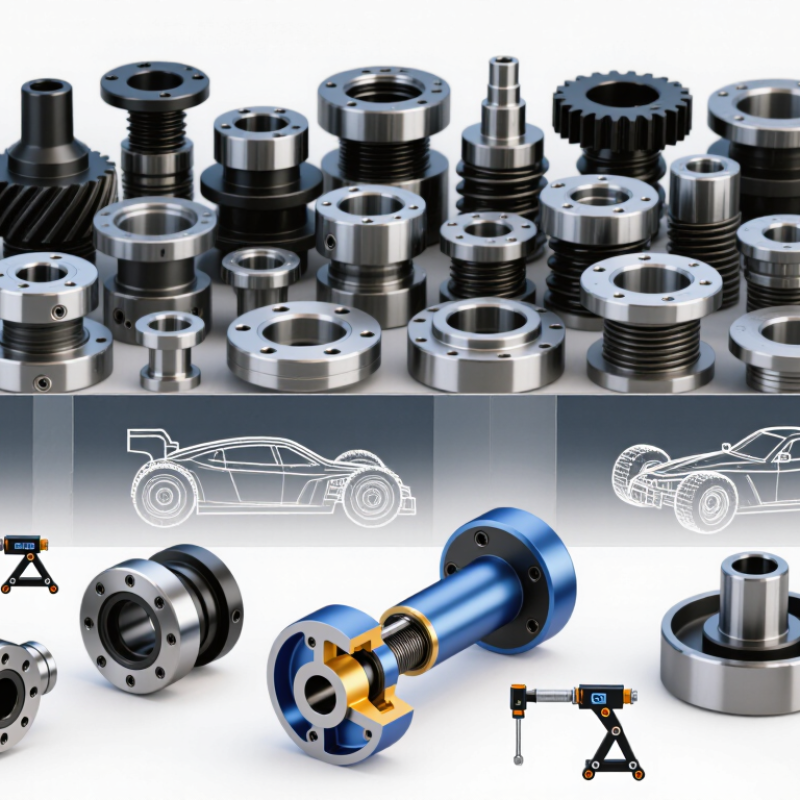
Overview of China’s Vitavon Racing Development Industry
China’s racing development industry combines precision machining, materials engineering, and practical track feedback. Manufacturers produce components such as aluminum suspension arms, chassis plates, steering parts, and drivetrain housings. Their work often begins with a digital design, then moves through CNC machining, deburring, and dimensional checks. Small tolerances matter. A slightly misaligned mounting hole can affect assembly and handling.
The supply chain benefits from access to machining services, metal suppliers, and finishing operations in close proximity. This can support shorter development cycles, especially when engineers need to revise a part after test runs. Experienced teams compare measured dimensions with real-world wear, not just computer models. Heat, vibration, impacts, and repeated servicing all reveal weaknesses. Track testing is essential.
Quality, however, is not uniform across every supplier or product range. Buyers should review material specifications, inspection records, and sample parts before making decisions. Clear communication about fit and intended use also helps prevent costly revisions. A polished surface can look convincing, yet it does not prove reliable performance. Some design assumptions will be wrong; careful testing and honest feedback are what make development improve.
Criteria for Selecting the Top 10 Manufacturers
Selecting a racing development manufacturer requires more than comparing catalog prices. Look for evidence of hands-on engineering, including test records, material specifications, and clear revision histories. A capable team should explain how it evaluates suspension geometry, drivetrain fit, and frame stress. Ask for sample inspection reports, not only polished product photos. Useful details include measured tolerances, fastener grades, and how parts perform after repeated track sessions.
Production consistency matters. Request information about machining equipment, inspection routines, and batch traceability. If possible, review a physical sample and check edges, alignment, and finish under good lighting. Small details matter. Communication is another practical test: can engineers answer technical questions directly, and do they flag design limits before production? A delayed reply is not proof of poor quality, but vague answers deserve follow-up. Independent testing or references from established racing teams can strengthen confidence, though neither replaces your own checks. I would also compare a few suppliers using the same drawing and acceptance criteria; otherwise, price comparisons can mislead. No checklist guarantees a perfect partner, and early prototypes may expose assumptions nobody noticed on paper. Keep records of agreed dimensions, materials, and change requests before approving a production run.
Profiles of Ten Leading Chinese Manufacturers
Profiles of ten leading Chinese manufacturers should compare the capabilities behind their racing-development components, not rely on promotional claims. Useful details include alloy grade, machining tolerances, heat treatment, and inspection methods. China’s 2024 vehicle production reached 31.282 million units, according to the China Association of Automobile Manufacturers. This scale signals a deep manufacturing base, but it does not prove racing-part performance.
The ten profiles can examine distinct strengths: precision CNC work, suspension components, drivetrain parts, lightweight structures, surface finishing, and small-batch customization. Look for evidence such as dimensional inspection records, material certificates, sample testing, and clear lead times. Ask how a part fits with original mounting points; a polished finish cannot correct poor alignment. Fit matters. Public production statistics describe the wider automotive sector, not specialist racing suppliers, so company-level verification remains essential. Some profiles may offer less public test data than buyers expect. That gap deserves attention.
Tips: Request drawings, tolerances, and a sample before comparing quotes. Check bolt holes, edge finishing, and packaging on arrival. Small details count.
Racing Technologies and Product Development Capabilities
Racing technology is more than a lighter part or a faster prototype. Strong development teams connect trackside observations with measurable design changes. They may use CAD models, CNC-machined samples, and material testing to check fit, weight, and durability. A useful review asks how each part performs after repeated vibration, heat cycles, and hard cornering. Small details matter. Check mounting points, fastener access, and whether replacement parts can be made consistently. These are practical signs of a mature development process, not just polished presentation.
Tips: Ask for test conditions, revision records, and clear material specifications. Compare prototype results with production samples. If the evidence is vague, ask again.
Manufacturers with capable engineering teams can explain why a design changed and what the next test will measure. Look for a process that includes feedback from drivers and technicians, not only computer simulations. A short test report with photos, dimensions, and failure notes can be more useful than broad performance claims. Still, one successful test does not prove long-term reliability. No process is perfect; even detailed testing can miss an unusual track condition. That is worth admitting. Buyers should favor transparent updates and repeatable checks over promises of instant gains.
Product Applications and Manufacturer Comparison
Product Applications and Manufacturer Comparison
Racing-development parts serve different needs: aluminum suspension arms and steering knuckles resist impacts, while chassis braces help control flex. Shock mounts and steering hubs affect handling on tight indoor tracks and rough outdoor circuits. For buyers comparing Chinese manufacturers, review machining tolerances, alloy documentation, surface finish, and repeatability across batches. Ask for measured sample parts, not only polished product photos. Small details matter.
Grand View Research valued the global CNC machine market at about US$101.2 billion in 2023 and projected 5.5% annual growth from 2024 to 2030. This is manufacturing context, not proof that any supplier makes better racing parts. A stronger comparison checks inspection records, material traceability, prototype lead times, and how suppliers handle fit issues. Anodizing can look even in photos yet vary around sharp edges. That is easy to miss.
Tips: Send a drawing with critical dimensions and specify the intended vehicle and track surface. Compare samples under the same fit test. Ask how rejected parts are recorded. A low quote may still work; it simply needs closer verification.