Why is Solar Power the Best Renewable Energy Solution for the Future

As the world confronts the pressing challenges of climate change and dwindling fossil fuel resources, the search for sustainable energy solutions has become paramount. Among the myriad of renewable energy options available, Solar Power stands out as an exceptionally promising alternative for the future. With its capacity to harness the abundant energy from the sun, Solar Power not only offers an environmentally friendly solution but also presents significant economic advantages.

The advantages of Solar Power extend beyond mere sustainability; they encompass a wide range of practical benefits that can transform the way we generate and consume energy. From reducing carbon emissions to lowering electricity costs, Solar Power emerges as a vital player in the transition towards a greener economy. Furthermore, the technology surrounding Solar Power continues to evolve, making it more efficient and accessible for various applications. As nations increasingly prioritize energy independence and resilience, Solar Power is poised to be at the forefront of the renewable energy revolution, paving the way for a sustainable future.

Why is Solar Power the Best Renewable Energy Solution for the Future

The Advantages of Solar Power Compared to Other Renewable Energy Sources

Solar power stands out as a leading renewable energy source due to its numerous advantages over other alternatives. Firstly, one of the most significant benefits of solar energy is its abundance and accessibility. The sun emits an immense amount of energy each day, enough to meet global energy demands many times over. Unlike wind or hydroelectric power, which are dependent on specific geographic conditions, solar energy can be harnessed in a variety of settings, making it adaptable for both urban and rural areas.

Additionally, solar power systems offer a high degree of scalability and versatility. They can be installed as small-scale residential units or large commercial solar farms. This flexibility allows for a customized approach to energy production, catering to the unique needs of different consumers. Moreover, advancements in solar technology have dramatically reduced installation and energy conversion costs, making it an increasingly economical choice. Solar panels also tend to have lower maintenance requirements compared to wind turbines or biomass facilities, which can be operationally intensive and require significant upkeep.

Lastly, the environmental benefits of solar energy are profound, as it generates electricity without emitting greenhouse gases during operation. This leads to a reduction in air pollution and contributes to the fight against climate change. In contrast, other renewable sources may still have impactful environmental repercussions, such as habitat disruption from hydroelectric dams. Therefore, solar power not only presents an effective and sustainable energy solution but also aligns closely with global initiatives to create a cleaner and more sustainable future.

Why is Solar Power the Best Renewable Energy Solution for the Future - The Advantages of Solar Power Compared to Other Renewable Energy Sources

Energy Source Initial Cost (per kW) Efficiency (%) Maintenance Cost (Annual) Environmental Impact Lifespan (Years)
Solar Power $3,000 15-20% $200 Low 25-30
Wind Power $1,500 35-45% $300 Moderate 20-25
Hydropower $5,000 40-45% $500 High 50-100
Geothermal $4,000 10-20% $100 Low 25-30
Biomass $2,500 20-25% $250 Moderate 20-30

Technological Innovations Driving Solar Power Efficiency and Affordability

Why is Solar Power the Best Renewable Energy Solution for the Future

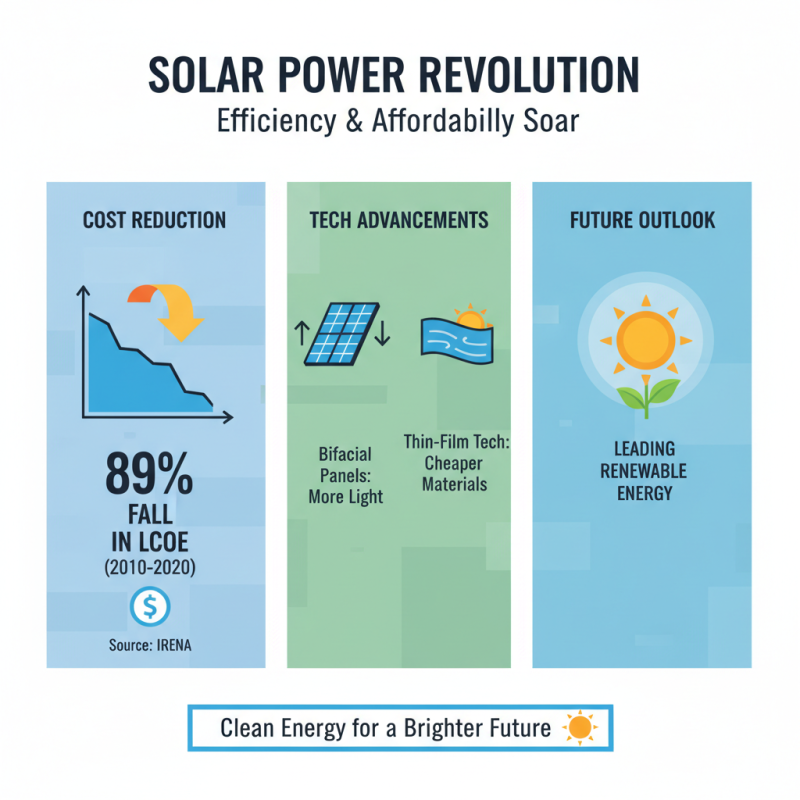
Technological innovations have significantly advanced solar power efficiency and affordability, positioning it as a leading renewable energy solution. According to the International Renewable Energy Agency (IRENA), the global weighted-average Levelized Cost of Electricity (LCOE) from solar photovoltaic (PV) projects fell by 89% between 2010 and 2020. This dramatic decrease is largely attributed to improvements in solar cell technology, such as bifacial solar panels, which can capture sunlight from both sides, and advances in thin-film technologies that reduce material costs while maintaining performance.

Moreover, enhanced energy storage solutions, particularly lithium-ion batteries, have emerged alongside solar technologies, allowing for greater reliability in energy supply. According to BloombergNEF, the cost of lithium-ion batteries has declined by approximately 89% since 2010, making it economically viable to store solar energy for use during non-sunny periods. This synergy of solar generation and storage ensures that energy systems are not only sustainable but also scalable and accessible, encouraging a broader adoption of solar power in urban and rural settings alike. As a result, such innovations position solar energy to play a pivotal role in the transition toward a low-carbon future.

Environmental Impact of Solar Power Versus Fossil Fuels

The environmental impact of solar power stands in stark contrast to that of fossil fuels, offering a cleaner and more sustainable energy solution. According to the International Energy Agency (IEA), solar energy has the potential to reduce greenhouse gas emissions by up to 70% by 2050 compared to current levels associated with fossil fuel usage. This substantial decrease highlights solar power's ability to mitigate climate change and promote a healthier planet. In addition, a study by the National Renewable Energy Laboratory (NREL) indicates that transitioning to solar could save the United States more than $2 trillion in avoided health and environmental costs, illustrating the broader benefits of solar energy adoption.

Furthermore, the water usage of solar power is significantly lower than that of fossil fuels. The U.S. Geological Survey has reported that conventional power plants can consume more than 600 gallons of water per megawatt-hour, primarily for cooling purposes. In stark contrast, solar photovoltaic systems require minimal water, mainly for maintenance purposes, thus preserving valuable water resources. This advantage is particularly crucial in arid regions where water scarcity is a pressing concern. The transition to solar power not only promotes a reduction in harmful emissions but also contributes to the conservation of critical natural resources, positioning solar energy as a leading choice for a sustainable future.

Economic Benefits of Solar Power for Individuals and Communities

The economic benefits of solar power are becoming increasingly evident for both individuals and communities. For homeowners, installing solar panels can lead to significant savings on electricity bills. By harnessing the sun’s energy, households can produce their own electricity, leading to reduced reliance on grid power and lower monthly expenses. Many regions offer financial incentives, such as tax credits and rebates, which further decrease the initial costs of solar installation. Over time, these savings accumulate, making solar energy an economically viable option for many families.

At the community level, the shift to solar power can drive job creation and stimulate local economies. The growth of the solar industry has led to an increase in demand for skilled labor in various sectors, including manufacturing, installation, and maintenance. Furthermore, communities that invest in solar energy projects often see improved energy independence and resilience. By diversifying their energy sources and reducing fossil fuel dependencies, regions can enhance their economic stability while promoting sustainable practices. Overall, the economic advantages of solar energy not only benefit individuals through cost savings but also foster greater community development and energy security.

Future Trends and Potential of Solar Energy in Global Energy Solutions

The future of solar energy is promising, with the International Energy Agency predicting that solar power could supply over 30% of the world's electricity by 2030. This projected growth is driven by advancements in technology and a significant reduction in the cost of solar panels. According to the Global Renewable Energy Policy Network, the price of utility-scale solar energy fell by over 82% from 2010 to 2019, making it one of the most cost-effective energy sources available. This trend is expected to continue, with further innovations in photovoltaic technology and energy storage systems enhancing solar energy's efficiency and reliability.

Furthermore, the potential of solar energy in global energy solutions is reinforced by its versatility and scalability. Solar systems can be deployed on various scales, from small rooftop installations to large utility-scale solar farms, providing a tailored energy solution to meet regional and local needs. As nations around the world commit to carbon neutrality and reducing their dependence on fossil fuels, solar energy stands out as a key player in the transition to sustainable energy. A report from the International Renewable Energy Agency indicates that solar power capacity is anticipated to expand dramatically, with an estimated increase of 1,000 GW added each year by 2025, transforming the energy landscape and contributing significantly to the fight against climate change.

Contact Details

Address:

Solar Pump Solutions,
Borrisokane, Co. Tipperary, Ireland.

Phone:

+353 86 1216312

Email:

sale@desasolar.com

Connect with us

Scroll to Top
Solar Pump Solutions
Privacy Overview

This website uses cookies so that we can provide you with the best user experience possible. Cookie information is stored in your browser and performs functions such as recognising you when you return to our website and helping our team to understand which sections of the website you find most interesting and useful.