China Best Solar Pumps for Irrigation How to Choose?
Choosing the China Best Solar Pumps for Irrigation requires more than comparing catalogue prices. Pump performance must match water demand, lifting height, and available sunlight. According to FAO AQUASTAT, agriculture accounts for about 70% of global freshwater withdrawals. Efficient pumping therefore affects both farm productivity and water security. Solar Pumps For Irrigation can reduce fuel dependence, but only when the complete system is correctly sized.
A reliable evaluation begins with measurable field conditions. Record the well depth, static water level, pipe length, daily water requirement, and seasonal sunlight. Then compare flow rate, total dynamic head, motor efficiency, controller quality, and protection features. The International Energy Agency reports that solar PV has become one of the world’s fastest-growing energy technologies. IRENA also shows that solar costs have fallen substantially over the past decade. These trends support solar pumping, yet they do not remove installation risks. A strong solar panel cannot compensate for an undersized pump.
Experienced buyers should request verified performance curves, not only claimed maximum flow. Ask whether the manufacturer tests pumps under recognized standards and provides warranty terms, spare parts, and remote technical support. Stainless-steel components may suit corrosive groundwater better. Dry-run protection matters when wells fluctuate. A low purchase price can mislead. No model wins everywhere. Farmers should also examine local service capacity, controller replacement costs, and winter performance. This guide compares Chinese manufacturers through those practical criteria, combining published industry data with engineering judgment. Some recommendations may remain uncertain without site measurements, because real farms rarely behave like laboratory examples.
What Are Solar Pumps for Irrigation and How Do They Work?
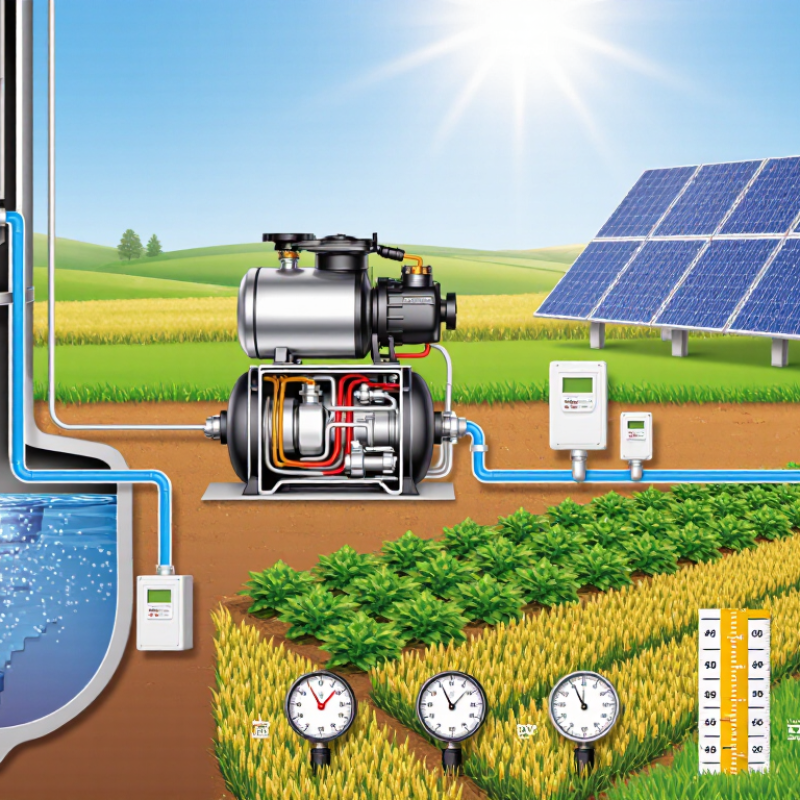
Solar pumps for irrigation use sunlight to move water from a well, canal, or storage tank. Photovoltaic panels produce direct-current electricity. A controller regulates that power for the motor. The motor then drives a surface or submersible pump. Water rises through pipes and reaches drip lines, sprinklers, or a tank.
The system’s output changes with sunlight. Clouds reduce flow, while midday brightness increases it. Pump selection must match water depth, required flow, total head, and daily irrigation demand. FAO AQUASTAT reports that agriculture accounts for about 70% of global freshwater withdrawals. Efficient pumping therefore matters. IRENA’s Renewable Capacity Statistics 2024 recorded about 1,419 GW of global solar photovoltaic capacity by the end of 2023. That expansion supports wider access to solar-powered pumping, but it does not remove site-specific design risks. A larger pump is not automatically better. Oversizing can waste money and produce unstable irrigation.
Which Types of Solar Pumps Are Best for Different Irrigation Needs?
Choosing the best solar pump for irrigation starts with water depth, not panel size. FAO’s AQUASTAT data shows agriculture uses about 70% of global freshwater withdrawals. A mismatched pump can waste both water and energy.
For deep wells, a submersible centrifugal pump is usually suitable. It pushes water upward efficiently and avoids suction losses at the surface. For shallow ponds, rivers, or storage tanks, a surface centrifugal pump is simpler to inspect and maintain. High-head wells with modest flow may need a positive-displacement helical rotor pump. It moves water steadily, even when sunlight is weak. That advantage is often overlooked.
Match the pump to the field. Drip irrigation needs lower flow and stable pressure, while sprinklers require stronger pressure and larger output. A 5,000-liter tank can act as practical storage during cloudy hours. Direct pumping without storage may fail during critical afternoon irrigation. It happens.
The International Renewable Energy Agency reported that global solar photovoltaic electricity costs fell to about USD 0.044 per kilowatt-hour in 2023. Lower energy costs improve irrigation economics, but they do not fix poor sizing. Measure daily water demand, total dynamic head, pipe length, and seasonal sunlight. A local test is valuable. My own caution is simple: manufacturers’ peak-flow figures can look impressive, yet real output drops with heat, dust, voltage loss, and cloudy weather. The best type is the one that meets crop demand reliably, not the one with the largest advertised number.
China Best Solar Pumps for Irrigation: How to Choose?
The chart compares common solar pump types by their typical operating head and flow range. Surface centrifugal pumps are suitable for shallow water sources and high-volume irrigation, while submersible pumps are better for wells and deeper sources. Helical rotor pumps provide higher lifting capability at lower flow rates, and diaphragm pumps are appropriate for small-scale drip irrigation and low-volume water delivery.
Values are typical engineering ranges for irrigation applications; actual performance depends on solar input, pipe size, water source, and system design.
How to Evaluate Water Source, Flow Rate, Head, and Solar Conditions?
China Best Solar Pumps for Irrigation How to Choose?
Choosing a solar pump starts with the water source, not the panel catalogue. Measure the dry-season water level, recovery rate, and usable storage. A borewell may look productive in spring but weaken in August. The FAO AQUASTAT database reports that agriculture accounts for about 70% of global freshwater withdrawals. Sustainable pumping matters. A simple bucket test can expose unrealistic expectations.
Calculate required flow from crop demand and irrigation hours. One millimetre of water over one hectare equals 10 cubic metres. FAO-56 crop evapotranspiration methods help estimate this demand. Required head includes vertical lift, pipe friction, filters, valves, and pressure at the field. A 35-metre well may require over 45 metres of total dynamic head. Ignoring losses is a common sizing mistake. It can make a powerful pump perform poorly.
Solar conditions need measured attention. The World Bank’s Global Solar Atlas provides long-term irradiation estimates, but nearby trees, dust, cloudy seasons, and panel direction still affect output. Compare monthly solar energy with monthly irrigation demand, not annual averages. Pump curves should be checked at the actual head and flow, not their best laboratory point. Leave a practical design margin. Too much oversizing wastes money; too little causes dry-season failure. The shortcut is tempting. Field records are better.
China Best Solar Pumps for Irrigation How to Choose? - How to Evaluate Water Source, Flow Rate, Head, and Solar Conditions?
| Evaluation Dimension | What to Measure | Typical Irrigation Reference Range | How to Interpret the Result | Selection Guidance |
|---|---|---|---|---|
| Water Source Type | Well, borehole, river, pond, reservoir, canal, or storage tank | Open sources generally allow easier inspection and cleaning; wells require borehole diameter and depth checks | The source determines pump construction, intake design, filtration, and installation method | Use a submersible pump for deep wells; use a surface or floating intake pump for accessible open water |
| Water Quality | Sand, silt, algae, organic matter, salinity, and corrosive chemicals | Clean water is preferred; abrasive sand and suspended solids increase wear and clogging risk | Dirty water may reduce hydraulic performance and shorten pump and irrigation-system life | Install a suitable screen or filter; select corrosion-resistant materials where salinity is significant |
| Static Water Level | Vertical distance from ground level to the water surface when no pumping occurs | Record the dry-season level rather than relying only on the wet-season level | A deeper water level increases the lifting requirement and solar energy demand | Use the lowest expected water level for sizing to avoid insufficient flow during dry periods |
| Dynamic Water Level | Water level while the pump is operating at the required flow | May be several metres lower than the static level in a productive well | This is more important than static level for calculating the actual suction or lifting requirement | Carry out a pumping test when possible and use the stabilized dynamic level |
| Required Flow Rate | Litres per second (L/s), litres per hour (L/h), or cubic metres per hour (m³/h) | Small drip systems: approximately 0.5–5 m³/h; larger sprinkler or field systems: approximately 5–30+ m³/h | The required flow depends on crop area, irrigation method, emitter discharge, and operating schedule | Do not select a pump only by outlet diameter; compare its flow at the required total head |
| Irrigation Method | Drip irrigation, micro-sprinkler, sprinkler, hose, or open-channel distribution | Drip systems commonly need lower flow but stable pressure; sprinklers usually need higher flow and pressure | The irrigation method affects both the flow requirement and the minimum operating pressure | Match the pump curve to the pressure requirement at the farthest or highest outlet |
| Vertical Lift | Elevation from the pumping water level to the highest discharge point | Every 10 metres of water elevation is approximately equal to 1 bar of pressure, excluding losses | Higher elevation requires greater pump head and normally increases the required motor power | Measure elevation accurately; do not use horizontal distance as a substitute for vertical lift |
| Pipe Friction Loss | Pipe length, internal diameter, material, flow velocity, valves, bends, filters, and fittings | Long, narrow, or heavily restricted pipelines can create substantial additional head loss | Friction loss reduces the flow available at the irrigation outlets | Include pipe and component losses in the pump calculation; avoid undersized delivery pipes |
| Total Dynamic Head | Static or dynamic lift + pressure head + pipe and fitting losses | A practical preliminary design often falls within 10–60 m, but site conditions may be outside this range | The pump must deliver the target flow at this total head, not at zero head | Select a pump from its performance curve at the calculated duty point: flow plus total head |
| Daily Water Requirement | Crop area, crop water demand, irrigation efficiency, and required operating days | Calculate in cubic metres per day; crop demand varies by climate, season, soil, and growth stage | Daily volume determines how long the pump must operate and how much solar energy is needed | Use seasonal peak demand for design and consider a storage tank for cloudy periods |
| Peak Sun Hours | Average equivalent hours per day at approximately 1 kW/m² solar irradiance | Many regions receive about 3–6 peak sun hours per day on an annual average; seasonal values can differ considerably | Fewer peak sun hours mean lower daily pumping output or a larger photovoltaic array | Use location-specific solar data and size for the critical irrigation season |
| Solar Array Orientation | Panel orientation, tilt angle, shading, dust, and row spacing | Panels should face the region’s strongest sun exposure with minimal shading during pumping hours | Shading on only part of an array can reduce the output of the entire electrical string | Keep panels clear of trees, buildings, and overhead lines; clean dusty panels periodically |
| PV Array Sizing | Total photovoltaic wattage compared with motor input power and daily water demand | The array is commonly sized above the nominal motor rating to accommodate temperature, wiring, conversion, and weather losses | A motor rated power and a PV array rated power are not interchangeable specifications | Follow the controller’s voltage and current limits and verify output under real operating conditions |
| Operating Schedule | Required pumping hours, irrigation windows, and acceptable interruption time | Direct solar pumping usually produces variable flow that follows available sunlight | If irrigation must continue after sunset or during cloudy weather, energy storage or water storage is needed | Prefer a storage tank when practical; batteries add cost, maintenance, and replacement considerations |
| Pump and Controller Protection | Dry-run protection, overvoltage, overcurrent, overload, surge, low-water, and over-temperature protection | Protection requirements depend on the pump type, motor technology, water level variation, and electrical layout | Protection features reduce damage caused by unstable solar input, blocked pipes, or a depleted water source | Choose a controller with clearly stated protection functions and accessible fault information |
| Final Duty-Point Check | Required flow, total dynamic head, daily volume, solar resource, and seasonal operating conditions | The final pump selection should be based on verified site measurements rather than a nominal horsepower label | A suitable system delivers the required water volume reliably under the least favourable design conditions | Confirm the pump curve, controller compatibility, PV voltage range, pipe size, installation depth, and maintenance access before purchase |
Note: The ranges above are preliminary screening references only. Final sizing should use site-specific measurements, seasonal water levels, irrigation requirements, solar-resource data, and the manufacturer’s verified pump performance curve.
How to Choose the Right Solar Pump Size and System Components?
China Best Solar Pumps for Irrigation: How to Choose?
Choosing the right solar pump starts with water demand, not panel wattage. Measure daily irrigation volume, well depth, water level, and total dynamic head. Total head includes vertical lift, pipe friction, filters, and pressure at the outlets. A pump moving 20 cubic meters daily may need very different power at 10 meters or 60 meters of head.
Use the pump curve to match flow and head under real conditions. Ask for performance data at your expected sunlight and water level. Peak sun hours vary by season, so design for the weaker months. A small safety margin helps, but excessive oversizing wastes money and may cause unstable operation.
I have seen systems selected from peak laboratory figures that performed poorly beside dusty fields. Field conditions are less forgiving.
The system also needs correctly sized panels, a compatible controller, suitable cables, and protection against dry running. A storage tank can be more reliable than batteries for irrigation, especially when water is needed after sunset. Select pipe diameter carefully; narrow pipes increase friction and reduce delivered flow. Add a float switch if the tank can overflow.
Check local electrical and groundwater rules before installation. Measurements can still be wrong.
Recheck the well level during pumping and compare actual flow with the design target after several days.
What Quality, Cost, Installation, and Maintenance Factors Matter?
Choosing a solar irrigation pump starts with water demand, not panel size. On a small vegetable farm, I measure daily flow, well depth, pipe distance, and elevation before comparing models. A pump rated for 3,000 liters per hour may deliver far less through narrow pipes. Sandy water needs a washable intake screen and a pump designed for abrasion. Stainless steel parts help, but they do not excuse poor filtration. Ask for performance curves at your actual head height. This is where many quotations become misleading. I once trusted a headline flow rate and underplanned the storage tank.
Purchase price is only one part of the cost. Include panels, mounting frames, controllers, cables, protection devices, pipes, tanks, labor, and replacement parts. A more efficient pump may cost more initially but reduce panel size and daily energy losses. Installation needs firm foundations, correct cable sizing, grounding, and protection from livestock. Place the controller above splash level. Keep pipes supported near bends. A qualified installer should test voltage, current, flow, and dry-run protection under real sunlight. Cloudy weather matters too; an oversized pump may cycle badly or stop often.
Maintenance should be simple enough for farm workers to perform. Clean filters weekly during dusty months, inspect cable glands after storms, and check outlet flow changes. Listen for grinding or repeated controller faults. Those signs deserve action, not optimism. Keep seals and fuses in a labeled box. Record pumping hours and water output; these notes reveal gradual wear. I still find maintenance plans too optimistic when access is difficult. Design around the person who will actually service the system, not the person who only sells it.
Related Posts
-
Global Leadership in Solar Solutions Best Solar Powered Pumps from China
-
Unleashing the Potential of Solar Powered Pumps at the Record Breaking 137th Canton Fair
-
How to Choose the Best Solar Pumps for Your Needs?
-
7 Essential Tips to Choose the Best Solar Pumps for Your Needs
-
Exploring the Surge of Solar Pumps Demand at the 137th Canton Fair: Insights and Opportunities
-
Top Solar Water Pumps for Global Buyers in 2026?
Contact Details
Address:
Solar Pump Solutions,
Borrisokane, Co. Tipperary, Ireland.