
How to Choose the Best Electric Utility Vehicle in 2026?

Choosing the best Electric Utility Vehicle in 2026 requires more than comparing battery size or purchase price. The right model must match its daily workload, terrain, climate, and charging access. A vehicle carrying tools across a farm faces different demands from one moving supplies through a warehouse.

Real-world evaluation should begin with payload, towing capacity, ground clearance, turning radius, and usable range. Published range figures can be optimistic. Cold weather, steep paths, heavy loads, and frequent stops may reduce performance. Check how the vehicle behaves with a full bed, not an empty one. That detail matters.

Safety and reliability deserve equal attention. Look for proven braking systems, stable handling, protective structures, clear visibility, and dependable service support. Battery warranty terms should explain coverage, capacity loss, charging requirements, and replacement conditions. Independent testing, manufacturer documentation, and feedback from experienced operators provide stronger evidence than polished advertising.

Think beyond the showroom.

Operating costs include electricity, tires, maintenance, software, insurance, and downtime. A cheaper vehicle may become expensive when parts arrive slowly or charging equipment needs an upgrade. Fleet buyers should also review telematics, driver controls, fleet integration, and local compliance requirements. These factors are easy to overlook.

There is no universal winner. A compact utility vehicle may excel in narrow facilities but struggle on rough ground. A larger model may offer more capacity while consuming more energy. Some comparisons remain imperfect because operating conditions differ. That uncertainty should be acknowledged, not hidden. This guide will help buyers compare practical performance, ownership costs, safety, and long-term value before making a confident 2026 decision.
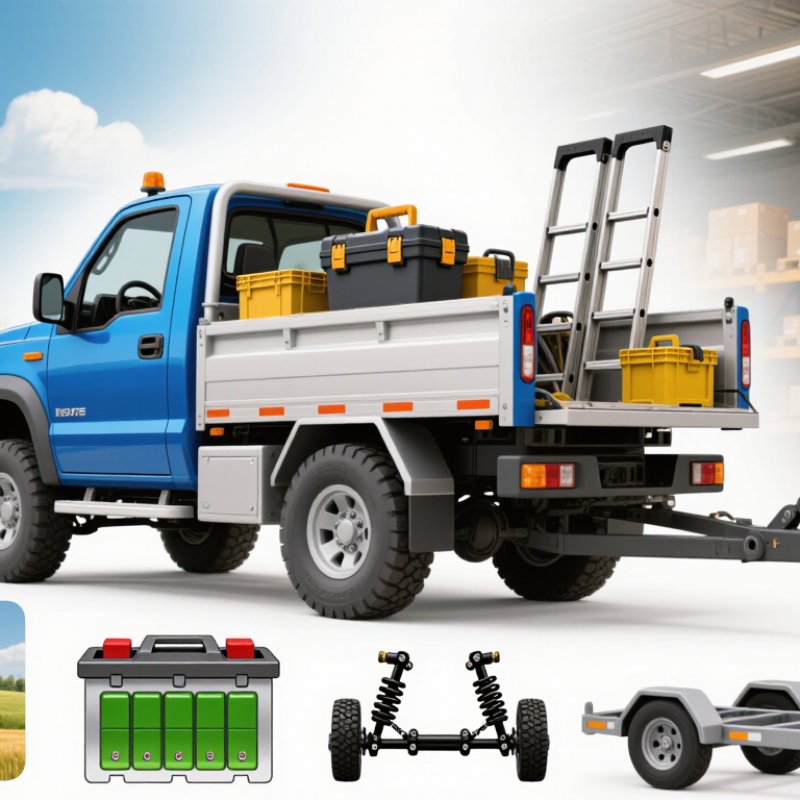
How to Choose the Best Electric Utility Vehicle in 2026?

Define the Main Tasks and Operating Conditions for the Vehicle

Choosing the best electric utility vehicle in 2026 starts with the work, not the battery size. Define the main tasks clearly. Will it carry tools, tow equipment, move materials, or support inspections? Record payload, towing weight, daily distance, stop frequency, and required ground clearance. Measure the dirt. A vehicle moving slowly across a warehouse needs different tires and protection from one serving farms or construction sites.

Operating conditions can change the buying decision. Map a typical shift, including slopes, rough surfaces, water exposure, temperature, and idle time. The IEA’s Global EV Outlook 2025 reports that global electric car sales exceeded 17 million in 2024, showing faster market development and broader charging investment. However, passenger-car data cannot fully predict utility-vehicle performance. That difference matters. The U.S. Department of Energy’s Alternative Fuels Data Center lists Level 2 charging commonly between 3 and 19 kW, while faster charging can exceed 50 kW. Check whether the site has suitable electrical capacity and enough parking time.

Test the vehicle with its real load. Do not rely only on an empty demonstration drive. Cold mornings, wet grass, repeated braking, and heavy accessories may reduce usable range. I have seen specifications look excellent until a route included steep ramps and frequent stops. That is a useful warning, but not a universal rule. Leave a practical energy reserve, verify charging access, and ask for service procedures, battery warranty terms, and independent efficiency data before selecting the vehicle.

How to Choose the Best Electric Utility Vehicle in 2026

Define the main tasks and operating conditions before comparing vehicle specifications. The chart shows practical planning benchmarks for four common electric utility-vehicle duties.

Payload and route-distance values are representative engineering planning benchmarks for light-duty utility fleets. Final selection should also consider road grade, surface condition, charging access, weather, duty cycle, and local safety requirements.

Compare Electric Utility Vehicle Types and Essential Features

Choosing the best electric utility vehicle in 2026 starts with the job, not the battery size. Compact cargo vans suit urban deliveries and maintenance routes. Flatbeds and pickups handle tools, materials, and heavier payloads. Small neighborhood utility vehicles work well on campuses, resorts, farms, and industrial sites. Their advantages differ sharply.

Check payload after passengers, equipment, and accessories are added. A vehicle rated for 1,000 kilograms may carry far less after upfitting. Turning radius, ground clearance, and waterproof connectors matter on narrow roads and muddy sites. Battery capacity should match daily distance, idle time, weather, and charging access. The International Energy Agency reported more than 17 million electric cars sold globally in 2024, showing stronger charging infrastructure, but utility fleets often operate in less convenient locations.

Charging speed deserves practical testing. A fast charger may reduce downtime, yet depot wiring can become expensive. BloombergNEF’s 2024 Battery Price Survey reported an average lithium-ion pack price of 115 dollars per kilowatt-hour. Lower battery costs may improve vehicle value, but replacement pricing and warranty limits still require careful review. Do not ignore thermal management, regenerative braking, driver visibility, and service diagnostics. I have found that simple controls often outperform impressive dashboards during long work shifts. Range estimates can disappoint in cold weather, heavy rain, or repeated stop-and-go driving. That weakness needs honest fleet trials. Ask for real payload data, hill performance, charging curves, and maintenance records before choosing.

How to Choose the Best Electric Utility Vehicle in 2026? - Compare Electric Utility Vehicle Types and Essential Features

Typical specifications for electric utility vehicles available in the 2026 market. Actual figures vary by battery size, payload, terrain, temperature, speed, body configuration, and local regulations.
Evaluation Dimension Neighborhood Utility Cart Electric UTV / Work Utility Vehicle Compact Electric Cargo Van Electric Utility Pickup Electric Box Van / Step Van
Best-Fit Applications Campuses, resorts, warehouses, gated communities, and short-distance maintenance Farms, construction sites, parks, rough paths, and off-road service work Urban deliveries, service technicians, facilities management, and local logistics Construction support, municipal work, landscaping, towing, and mixed on-road use High-volume parcel delivery, food distribution, mobile workshops, and fleet operations
Typical Seating 2–6 occupants 2–6 occupants 2–3 occupants 2–6 occupants 2–3 occupants
Typical Maximum Speed 25–45 km/h 40–80 km/h 80–120 km/h 100–160 km/h 80–120 km/h
Typical Real-World Range 40–100 km per charge 60–160 km per charge 120–280 km per charge 180–450 km per charge 120–300 km per charge
Typical Battery Capacity 5–20 kWh 10–40 kWh 40–100 kWh 60–180 kWh 60–150 kWh
Typical Payload Capacity 250–800 kg 300–1,000 kg 500–1,500 kg 700–1,500 kg 800–2,000 kg
Typical Towing Capacity 0–500 kg 500–1,500 kg 750–2,500 kg 1,500–5,000 kg 1,000–3,500 kg
Load Area or Cargo Volume 0.3–1.5 m³ open deck or rear bed 0.5–2.0 m³ dump bed or cargo box 4–12 m³ enclosed cargo area 1.2–2.5 m³ open bed, with optional covered storage 10–25 m³ enclosed cargo area
Drive Configuration Usually rear-wheel drive; all-wheel drive is less common Rear-wheel drive or selectable all-wheel drive; four-wheel drive is available for difficult terrain Usually front-wheel drive or rear-wheel drive Rear-wheel drive or all-wheel drive Usually rear-wheel drive; all-wheel drive is available on selected configurations
Ground Clearance 100–180 mm 250–350 mm 140–220 mm 180–280 mm 150–230 mm
Charging Options Standard AC outlet or low-power AC charger; approximately 4–10 hours AC charging; approximately 4–12 hours depending on battery size AC charging commonly takes 4–10 hours; DC fast charging may reduce charging to about 30–90 minutes AC charging commonly takes 6–15 hours; DC fast charging may reduce charging to about 25–90 minutes AC charging commonly takes 6–15 hours; DC fast charging is recommended for multi-shift fleets
Regenerative Braking Usually available; useful on frequent stop-and-go routes Usually available; effectiveness depends on terrain and load Commonly standard; adjustable levels are beneficial in urban delivery work Commonly standard; higher vehicle mass increases the value of effective regeneration Commonly standard; important for repeated starts, stops, and downhill operation
Battery Chemistry Considerations Lead-acid and lithium-ion options exist; lithium-ion generally offers lower weight and faster charging Lithium-ion is generally preferred for higher power, vibration resistance, and frequent cycling Lithium-ion is the usual choice; battery thermal management is important for commercial duty Lithium-ion with a robust thermal-management system is preferred for high loads and long routes Lithium-ion with active thermal management is recommended for intensive fleet use
Weather and Terrain Capability Best on paved or well-maintained surfaces; weather protection varies significantly Best choice for mud, gravel, slopes, uneven ground, and outdoor work Suitable for paved roads and moderate weather; enclosed body provides strong cargo protection Suitable for roads, worksites, and variable weather; verify axle and traction limits Best for paved routes and dense delivery schedules; less suitable for narrow or rough access roads
Safety Features to Prioritize Seat belts, parking brake, lighting, mirrors, rollover protection, and speed control Seat belts, rollover protection, protective doors or nets, traction control, and hill-descent control Electronic stability control, anti-lock braking, airbags, reversing camera, driver-assistance systems, and cargo partition Electronic stability control, anti-lock braking, airbags, trailer-brake compatibility, camera systems, and blind-spot monitoring Electronic stability control, anti-lock braking, airbags, 360-degree cameras, pedestrian detection, and secure cargo partitioning
Climate and Thermal Management Basic cabin heating and ventilation may be sufficient for short routes Heated or weather-resistant cabin is important for prolonged outdoor work Cabin heating, air conditioning, and battery preconditioning improve comfort and range consistency Cabin climate control and battery preconditioning are valuable in hot or cold regions Cabin climate control, battery thermal management, and optional cargo-temperature control may be required
Fleet and Connectivity Features Basic hour meter, battery monitor, and service reminders Operating-hour tracking, GPS, maintenance alerts, and usage monitoring GPS fleet tracking, route planning, charging schedules, driver access control, and energy reports Payload monitoring, trailer data, GPS tracking, charging management, and remote diagnostics Advanced telematics, route optimization, driver monitoring, charge scheduling, and remote diagnostics
Typical Operating Cost Profile Low energy and maintenance costs; limited range and speed reduce productivity on public roads Low routine maintenance costs, but tires, suspension, and underbody components may wear faster off-road Low energy and drivetrain maintenance costs; tire and battery costs are significant fleet considerations Low routine drivetrain maintenance, but high energy use and tire costs can increase with heavy loads Low drivetrain maintenance costs; charging infrastructure, battery capacity, and utilization strongly affect total cost
Key Buying Priority Low purchase cost, maneuverability, simple charging, and easy serviceability Traction, ground clearance, durability, suspension strength, and weather protection Cargo volume, route range, charging speed, urban maneuverability, and driver safety Payload, towing, chassis strength, range under load, and charging access Usable cargo volume, rapid charging, uptime, access ergonomics, and fleet telematics
Main Limitation Limited road legality, weather protection, range, and highway capability Higher energy consumption and lower comfort or cargo protection than enclosed road vehicles Higher purchase price and reduced range when heavily loaded or operated in cold weather Large size, higher energy demand, and potentially expensive charging infrastructure Higher acquisition cost, larger turning radius, and increased charging-power requirements
Recommended Choice When... Your routes are short, speeds are low, and access to a standard charging outlet is convenient You regularly carry equipment over uneven terrain or need strong traction and ground clearance You operate predictable urban or regional delivery routes with enclosed cargo requirements You need one vehicle for both worksite tasks and longer on-road travel, including towing You run intensive commercial delivery routes where cargo capacity and daily uptime are critical
Selection rule: Choose the vehicle according to the heaviest regular payload, the longest daily route, the most demanding terrain, and the available charging power. For commercial operations, compare total cost of ownership over the expected service life rather than purchase price alone.

Evaluate Battery Range, Charging, Power, and Load Capacity

How to Choose the Best Electric Utility Vehicle in 2026?

Evaluate Battery Range, Charging, Power, and Load Capacity

Choosing an electric utility vehicle starts with the workday, not the brochure. Record daily distance, stops, terrain, and average payload. A vehicle rated for 200 kilometers may travel less on slopes, cold mornings, or rough ground. Usable battery capacity matters more than the headline figure. Leave a practical reserve for unexpected trips.

Charging time can determine whether the vehicle works twice daily. Check the charging input, outlet requirements, and available workplace power. A larger battery is not always better. It may increase downtime if the charger is slow. I would test charging from the expected battery level, rather than trusting an ideal laboratory estimate.

Power and load capacity require careful separation. Motor power affects hills, acceleration, and towing. Payload includes workers, tools, cargo, and added equipment. Overloading can reduce range and handling. Measure the actual cargo space with a loaded pallet or tool case. Small details matter. My first range estimate was too optimistic because I ignored repeated hill climbs. That mistake changed the purchase criteria. Ask for verified test conditions, review the operating manual, and request a supervised trial on your real route. Specs are useful, but measured performance is more reliable.

Assess Safety Systems, Comfort, Durability, and Maintenance Needs

Choosing the best electric utility vehicle in 2026 requires more than checking range. Safety systems should match the worksite. The IIHS reports that forward collision warning with automatic braking can reduce rear-end crashes by about half. Test these systems around pedestrians, trailers, and narrow loading areas. A quiet motor can hide danger. Check camera visibility, blind-spot alerts, braking response, and emergency access.

Comfort affects productivity during long shifts. Sit with protective footwear and winter clothing before buying. Examine seat support, steering adjustment, step height, cabin noise, and screen readability under direct sunlight. The U.S. Department of Energy notes that electric vehicles generally need fewer maintenance services because they have fewer moving parts. However, battery cooling, charging equipment, tires, and software still require inspection. The IEA’s Global EV Outlook shows electric truck adoption is expanding, but operating conditions vary sharply by climate and payload. Published range can disappoint in cold weather or on steep sites.

Tips

Request a loaded demonstration, not a showroom drive. Measure real route distance, slope, idle time, and charging access for two weeks. Review battery-health reports and service response times. Ask for corrosion protection beneath the chassis. I would not trust a long warranty alone; unclear exclusions can become expensive. Keep a simple maintenance log. It may reveal weaknesses earlier than a dashboard warning.

Calculate Total Ownership Costs and Select the Best 2026 Model

Choosing the best electric utility vehicle in 2026 starts with total ownership cost, not purchase price. Build a five-year spreadsheet first.

Include purchase cost, financing, insurance, tax, charging hardware, electricity, tires, maintenance, downtime, and resale value. Use real routes.

For example, assume 20,000 miles annually and energy use of 2.2 kWh per mile. At $0.14 per kWh, yearly electricity costs about $6,160. The figure changes sharply with depot demand charges, winter heating, and loaded stop-and-go driving. The U.S. Department of Energy’s Alternative Fuels Data Center recommends measuring local electricity prices and charging patterns before fleet investment. That advice is easy to ignore.

Compare this result with fuel costs for an equivalent vehicle. Add oil changes, brake service, and engine repairs. The International Energy Agency reported that battery pack prices fell in 2023, improving the long-term economics of electric fleets. However, lower battery prices do not guarantee lower ownership costs. A large battery may raise the purchase price without helping a short daily route. Select usable range, payload, ground clearance, and charging speed together.

My first spreadsheet looked convincing until I added one missed workday. A vehicle waiting for a delayed charger can erase several weeks of energy savings. The National Renewable Energy Laboratory highlights route duty cycles and charging availability as important fleet-planning variables.

Request service records, warranty limits, battery-health evidence, and real winter range. Then test the vehicle on your roughest route, not the showroom loop. Include a replacement reserve. You may never use it, but excluding it makes the calculation too optimistic.

Contact Details

Address:

Solar Pump Solutions,
Borrisokane, Co. Tipperary, Ireland.

Phone:

+353 86 1216312

Email:

sale@desasolar.com

Connect with us

Scroll to Top
Solar Pump Solutions
Privacy Overview

This website uses cookies so that we can provide you with the best user experience possible. Cookie information is stored in your browser and performs functions such as recognising you when you return to our website and helping our team to understand which sections of the website you find most interesting and useful.