
How to Choose Automatic Weigh Price Labelling Machines
Choosing Automatic Weigh-Price Labelling Machines is a practical decision for retailers, food processors, and distribution teams. The right system must weigh products accurately, calculate prices consistently, and apply readable labels at a steady speed. It should also match the product range, package sizes, production volume, and available floor space. A machine that performs well with apples may struggle with soft bakery items or irregular meat cuts. Real operating conditions matter.
Look beyond advertised speed. Check weighing accuracy, label placement, software compatibility, cleaning access, and operator training requirements. Stainless steel construction can support frequent sanitation, while a clear touchscreen can reduce mistakes during busy shifts. Ask suppliers for trial results, service response times, spare-parts availability, and references from similar businesses. Reliable support often matters more than a slightly lower purchase price. It is easy to overlook.
E-E-A-T principles are important here. Choose manufacturers with proven engineering experience, transparent specifications, and documented quality procedures. Confirm that the machine can support applicable weighing, labelling, food safety, and electrical requirements in your market. Independent testing or calibration records can strengthen confidence. Still, no machine is perfect. Sensors need maintenance, labels can misfeed, and software settings may require adjustment. A careful evaluation should include these weaknesses, not hide them.
The best choice balances accuracy, hygiene, flexibility, total ownership cost, and dependable service. Begin with your daily workflow. Then compare machines against measurable needs, not impressive promises. This approach helps create a labelling process that remains stable when orders increase, products change, or staff members rotate.
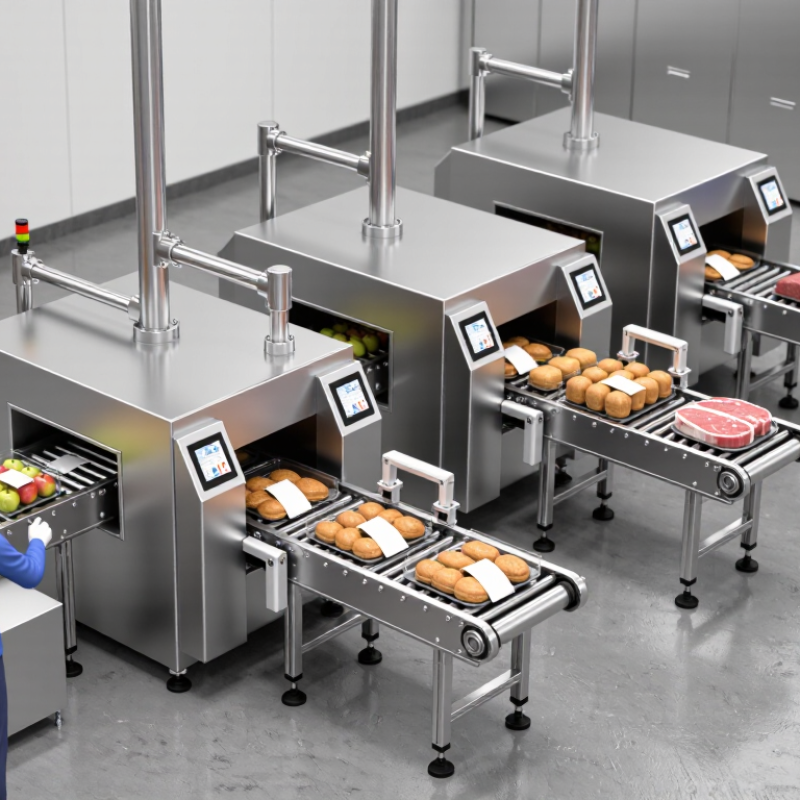
Define Line Speed: Compare 30–120 Packs per Minute Against Demand
How to Choose Automatic Weigh Price Labelling Machines
Line speed should follow real demand, not the largest number on a brochure. A 30-pack-per-minute machine produces 1,800 packs hourly. At 120 packs per minute, output reaches 7,200 packs hourly. That gap is substantial. Define average orders, peak periods, product changeovers, and planned maintenance before selecting equipment. A 15% demand increase can quickly expose an undersized line. Leave headroom.
Convert the forecast into practical production time. If a facility needs 18,000 packs daily, three hours at 120 packs per minute might appear sufficient. That calculation ignores weighing adjustments, label-roll changes, rejected packs, and sanitation. The OEE Foundation commonly uses 85% as a world-class Overall Equipment Effectiveness benchmark, not an everyday guarantee. Applying 85% reduces a theoretical 7,200 packs hourly to approximately 6,120 usable packs. Actual performance may be lower during frequent product changes. That is where spreadsheet confidence becomes questionable.
PMMI’s 2023 packaging automation research identifies labor availability and operational consistency as major automation drivers. These factors support choosing stable throughput over maximum speed. Weigh-price labelling systems should also handle variable product weights without slowing the complete line. Test representative products, including soft packs, uneven portions, and reflective packaging. Record missed labels, weight corrections, and stoppages across several shifts. A machine achieving 120 packs per minute in a short demonstration may deliver only 70 in production. Compare sustained output against peak demand, then review the results with operators and maintenance staff.
| Target Line Speed | Approx. Packs per Hour | Recommended Sustained Output | Suitable Daily Demand | Typical Product Applications | Operational Considerations | Capacity Fit |
|---|---|---|---|---|---|---|
| 30 packs/min | 1,800 packs/hour | 1,350–1,600 packs/hour | Up to 10,000 packs per 8-hour shift | Small fresh-food batches, prepared meals, bakery items, and short production runs | Allows more time for product spacing, label verification, roll changes, and manual replenishment. | Low-volume fit |
| 45 packs/min | 2,700 packs/hour | 2,000–2,400 packs/hour | 10,000–16,000 packs per 8-hour shift | Retail trays, meat portions, poultry packs, cheese, and standard ready-to-eat products | A practical starting point when demand is growing but product changeovers remain frequent. | Moderate-volume fit |
| 60 packs/min | 3,600 packs/hour | 2,700–3,200 packs/hour | 16,000–22,000 packs per 8-hour shift | High-volume chilled foods, fresh produce, meat, seafood, and prepared food lines | Provides a useful balance between throughput, weighing stability, label application, and changeover time. | Medium-volume fit |
| 75 packs/min | 4,500 packs/hour | 3,400–4,000 packs/hour | 22,000–28,000 packs per 8-hour shift | Large retail programs, multiple product sizes, and continuous production schedules | Requires consistent product spacing and dependable upstream feeding to maintain weighing accuracy. | High-volume fit |
| 90 packs/min | 5,400 packs/hour | 4,000–4,800 packs/hour | 28,000–34,000 packs per 8-hour shift | Large-scale protein, produce, convenience-food, and contract-packing operations | Suitable when demand is stable; allow sufficient conveyor length for accurate weighing and label placement. | Very high-volume fit |
| 105 packs/min | 6,300 packs/hour | 4,700–5,600 packs/hour | 34,000–40,000 packs per 8-hour shift | Continuous high-output lines with standardized pack formats and limited interruptions | Higher speeds increase the importance of precise timing, stable product presentation, and automatic reject handling. | High-demand fit |
| 120 packs/min | 7,200 packs/hour | 5,400–6,400 packs/hour | 40,000+ packs per 8-hour shift | Industrial-scale production, major retail supply, and highly standardized product lines | Best for long runs with consistent pack dimensions; verify that upstream filling and downstream case packing can match the speed. | Maximum-demand fit |
| Planning note: Sustained output is estimated at approximately 75–90% of nominal speed to allow for product spacing, weighing checks, label-roll changes, sanitation, minor stoppages, and product changeovers. Actual performance depends on product shape, weight range, conveyor layout, label size, and operator workflow. | ||||||