
Best Marine USB Charger for Boat and Outdoor Adventures?
As outdoor adventures gain popularity, the demand for reliable charging solutions increases. A Marine Usb Charger is essential for boaters and outdoor enthusiasts alike. According to the National Marine Manufacturers Association (NMMA), around 50% of boat owners value onboard technology. This trend shapes how companies design and market these chargers.
Expert Mark Reynolds, a marine technology consultant, emphasizes, "The right marine charger ensures safety and convenience." It highlights the need for durable, weather-resistant chargers in the marine environment. Many users overlook the importance of USB power in critical situations. For example, providing consistent power for navigation systems is crucial.
Choosing a Marine USB Charger involves understanding these products' specifications and reliability. Reports indicate that nearly 30% of users experience charging failures when using subpar chargers. This indicates a need for awareness in this field. A reliable charger can mean the difference between a safe journey and a frustrating experience. Learning from industry insights can guide consumers in making informed decisions.
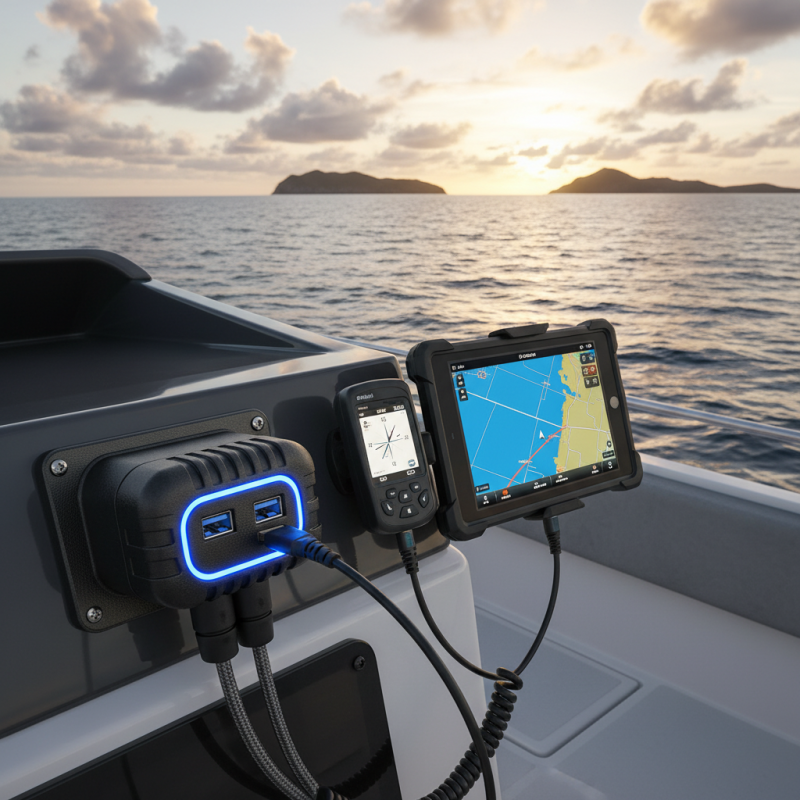
Understanding the Importance of Marine USB Chargers for Outdoor Activities
Marine USB chargers are essential for outdoor activities on boats and in remote locations. They ensure that electronic devices remain powered up. According to a report by the National Marine Manufacturers Association, over 80% of boaters rely on electronics for navigation and communication, making reliable charging crucial.
For outdoor adventurers, having a dependable power source enhances safety and convenience. Many marine USB chargers are designed to withstand harsh conditions. They are often water-resistant and can handle vibrations from waves. Data suggests that chargers equipped with quick charge technology can reduce charging time by up to 50%, providing efficiency during long outings.
Tip: Always check the voltage and amperage specifications before purchasing a charger. Many devices require specific power inputs.
Also, consider using multi-port chargers. They can charge various devices simultaneously, which is efficient during group outings. Remember, not all chargers are built equally. Some may not perform optimally in extreme weather conditions.
It's crucial to evaluate performance ratings and user reviews. Many outdoor enthusiasts undervalue the importance of choosing the right charger until their devices run out of power. A few minutes of research can make a big difference in your outdoor experience.
Key Features to Look for in a Marine USB Charger
When choosing the best marine USB charger for your outdoor adventures, focus on key features. Durability is essential; it should withstand water, UV rays, and harsh conditions. Look for chargers with high IP ratings, confirming waterproof capability. This is crucial when you're on a boat or hiking near water.
Power output matters too. A good marine charger should provide fast charging. Check for compatibility with different devices. You want to charge phones, tablets, and other electronics efficiently. Multiple ports can also enhance convenience, allowing you to power several devices simultaneously.
**Tip:** Always verify voltage compatibility to avoid device damage. Use a charger that matches your devices' requirements.
Another aspect to consider is installation ease. A straightforward installation process can save time and frustration. Look for products with clear instructions and well-designed mounting options. Ventilation is also key. A charger that dissipates heat effectively will last longer.
**Tip:** Consider where you will mount the charger. Accessibility is important for frequent use.
Best Marine USB Charger Features Comparison
Top Marine USB Charger Brands for Boaters and Adventurers
When exploring the best marine USB chargers, several brands stand out for their reliability. Boaters and adventurers need devices that can withstand harsh conditions. Quality chargers are designed to resist water and corrosion. They should maintain performance in extreme temperatures, too. Look for features like built-in overcharge protection and fast charging capabilities.
Several companies focus on durability and efficiency. They offer USB chargers that can handle the demands of outdoor use. Many designs include multiple ports, allowing for simultaneous charging of devices like phones and GPS units. Users should consider factors such as installation ease and cable length. A well-placed charger can enhance the boating experience.
However, not all products are created equal. Some marine chargers may perform well initially but fail over time. It’s essential to read user reviews before making decisions. Durability and reliability are significant concerns. Investing in a trusted brand can prevent frustrating experiences on the water. Proper research is crucial for the best outdoor adventures.
Installation and Safety Tips for Using Marine USB Chargers
When installing a marine USB charger, consider the marine environment. Saltwater can be corrosive. Choose chargers designed with materials that resist corrosion. Look for chargers with an IP rating of at least 65. This indicates they are water-resistant. Installation requires attention to detail, especially in wiring. Ensure connections are tight and insulated. Improper installation can lead to electrical failures or even fires. Statistics show that improper wiring contributes to 29% of boating electrical incidents.
Safety measures should be a priority. Always use circuit protection to prevent overload. This helps avoid equipment damage. Many marine chargers offer built-in safety features such as overheating protection. However, do not rely solely on these features. Regular checks are necessary. Over 60% of boaters experience USB charger failures due to neglect.
Be mindful of charging behavior. Charging multiple devices simultaneously can lead to slower charging rates. This affects user experience. Remember that not all devices will charge quickly on a marine charger. It’s essential to understand the limitations of your equipment. Taking time to educate yourself leads to safer adventures on the water. Research shows that informed boaters are 40% less likely to face electrical issues.
Frequently Asked Questions About Marine USB Chargers
When choosing a marine USB charger, many factors come into play. Users often wonder about the differences between models and their specific features. A recent report from Marine Technology reveals that the average consumer spends over $100 on marine electronic accessories. Among these, USB chargers are crucial for powering devices during adventures.
One common concern is weather resistance. Marine USB chargers should meet IP67 ratings for waterproofing. Such chargers can withstand harsh conditions, making them essential for boating. Additionally, it's noted that the charging speed varies based on voltage and amps, with most chargers providing a 2.1A output, which balances efficiency and safety.
Another frequently asked question centers on installation complexity. While some chargers are plug-and-play, others may require technical skills. It's important to assess individual skill levels before purchasing a charger. Not everyone is comfortable with wiring. Moreover, reports indicate that improper installation can lead to equipment failures. Users often learn through trial and error, leading to a more profound understanding of the product's longevity and functionality.
Best Marine USB Charger for Boat and Outdoor Adventures
| Model | Power Output | Ports | Water Resistance | Price Range |
|---|---|---|---|---|
| Model A | 5V 2.4A | Dual | IP67 | $15-$25 |
| Model B | 5V 3.0A | Single | IP68 | $20-$35 |
| Model C | 5V 4.8A | Dual | IP66 | $30-$45 |
| Model D | 5V 2.1A | Single | IP65 | $10-$20 |
Article Source:
Contact Details
Address:
Solar Pump Solutions,
Borrisokane, Co. Tipperary, Ireland.
