
Best Electric Forklift Battery Options for Efficient Performance?

The Electric Forklift Battery is crucial for enhancing performance in various industries. Selecting the right battery impacts productivity and efficiency. Many businesses overlook this aspect, focusing solely on the forklift’s physical capabilities. However, the battery often dictates the machine's overall success.

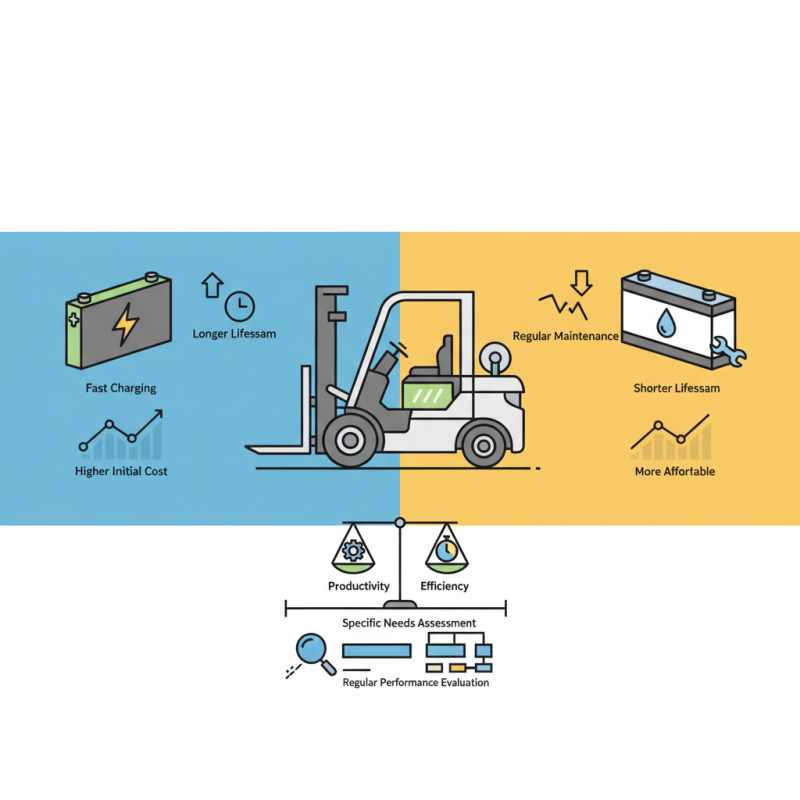
Different types of electric forklift batteries exist, each with unique benefits and drawbacks. Lithium-ion batteries offer fast charging and longer life, but they come at a higher cost. Lead-acid batteries, while more affordable, require regular maintenance and have shorter lifespans. Businesses must weigh these factors carefully.

Understanding the specific needs of your operations can guide your decision. Regular battery performance evaluation is essential to ensure longevity and efficiency. Identifying potential issues can lead to better performance over time. This article aims to help you navigate these options effectively for optimal electric forklift battery choices.
Best Electric Forklift Battery Options for Efficient Performance?

Types of Electric Forklift Batteries and Their Applications

Electric forklifts rely heavily on efficient battery systems. There are various types of batteries, each with unique applications. Lead-acid batteries are the most common choice. They are cost-effective and reliable for standard operations. These batteries require regular maintenance and have a limited lifespan. However, their performance can decline significantly in harsher conditions.

Lithium-ion batteries are gaining popularity. They offer longer run times and faster charging. Their lightweight design enhances the forklift's efficiency. These batteries are less maintenance-intensive compared to lead-acid counterparts. However, they come with a higher initial cost. It's essential to weigh long-term benefits and upfront expenses.

Nickel cadmium batteries are another option, known for their resilience in extreme temperatures. They perform well in demanding environments but can be costly to maintain. Each battery type has strengths and drawbacks. Understanding your specific operational needs is critical for optimal performance. Choosing the right battery can significantly impact productivity and efficiency.

Key Factors Influencing Electric Forklift Battery Performance

The performance of electric forklift batteries hinges on several key factors that directly affect their efficiency. Battery chemistry plays a crucial role. Lithium-ion batteries often provide higher energy density. They also charge faster than traditional lead-acid batteries. According to a report by the Industrial Truck Association, lithium-ion batteries can enhance productivity by up to 30%. This shift is essential for businesses aiming for maximum efficiency.

Another significant element is the operational environment. Batteries can degrade more rapidly in extreme temperatures. A study revealed that cold conditions could reduce battery performance by 20%. Understanding the specific workflow conditions can help in selecting the right battery type. Proper maintenance also influences battery life. Regular checks and timely replacements can mitigate unexpected downtimes.

The charging practices also determine the overall performance. Inconsistent charging can lead to reduced capacity and lifespan. Fleet managers must assess their usage patterns regularly. The efficiency of battery management systems is often overlooked. These systems can optimize charging schedules, enhancing overall efficiency. Yet, not every business prioritizes their implementation. Balancing cost and performance can pose challenges that require careful reflection.

Comparative Analysis of Lead-Acid and Lithium-Ion Batteries

When comparing lead-acid and lithium-ion batteries for electric forklifts, several factors come into play. Lead-acid batteries have been the traditional choice for years. They are cost-effective upfront, but their lifespan is shorter. Maintenance is required to prevent sulfation. Users often overlook this aspect, which can lead to larger operational costs down the line.

Lithium-ion batteries, on the other hand, bring modern efficiency. Their higher energy density allows for longer run times. They are lighter and require less maintenance. However, the initial investment can be daunting. It's crucial to evaluate your operational needs before choosing between the two.

Tips: Consider the total cost of ownership when selecting a battery. Factor in maintenance and replacement costs over time. Test different batteries under your typical workload; this can yield insightful data for your decision. Investing in proper training for staff on battery care can also enhance performance and longevity.

Best Electric Forklift Battery Options for Efficient Performance

Battery Type Lifespan (years) Charge Time (hours) Energy Density (Wh/kg) Maintenance Cost (per kWh)
Lead-Acid 3-5 8-12 30-40 Regular maintenance required $150-$200
Lithium-Ion 5-15 1-2 150-250 Minimal maintenance required $300-$400

Maintenance Tips for Extending Electric Forklift Battery Lifespan

Maintaining electric forklift batteries is crucial for maximizing performance. Regular checks can prevent costly downtime. Ensure connections are tight and clean. Dirt and corrosion can disrupt the flow of electricity. Inspect terminals frequently. A small investment in maintenance can yield significant savings over time.

Proper charging practices are essential. Avoid overcharging; it shortens battery life. Charge only when necessary. Implement a charging schedule based on usage patterns. Deep discharges can strain the battery, leading to premature failure. Keeping batteries at the right temperature is vital. Extreme heat or cold can impact efficiency and lifespan.

Water levels must be monitored closely. Low water can cause damage. Use distilled water to refill when necessary. Clean the battery casing to prevent buildup of harmful substances. This task is often overlooked. A clean battery operates better and lasts longer. Regular maintenance can be tedious, but it pays off in the long run.

Electric Forklift Battery Performance Comparison

Emerging Technologies in Electric Forklift Battery Solutions

The evolution of electric forklift batteries is a fascinating journey. New technologies continuously emerge, leading to enhanced efficiency and performance. Lithium-ion batteries have gained traction due to their superior energy density and faster charging times. These batteries often require less maintenance than traditional lead-acid counterparts. This shift allows for longer operational hours and reduced downtime in warehouses.

Another exciting development is solid-state battery technology. These batteries promise improved safety and greater longevity. By replacing liquid electrolytes with solid materials, manufacturers aim to minimize risks like leaks or fires. Despite these advances, challenges remain. The manufacturing costs are currently high, which can affect market adoption. Additionally, the recycling process for these batteries needs further refinement.

Innovations in energy management systems are also noteworthy. Smart technology allows for optimized energy use, adjusting power based on demand. This leads to cost savings and better energy consumption. However, integration with existing systems poses challenges. The balance between new and old technology can be tricky. As the industry moves forward, it’s crucial to address these hurdles while continuing to prioritize performance and safety.

Contact Details

Address:

Solar Pump Solutions,
Borrisokane, Co. Tipperary, Ireland.

Phone:

+353 86 1216312

Email:

sale@desasolar.com

Connect with us

Scroll to Top
Solar Pump Solutions
Privacy Overview

This website uses cookies so that we can provide you with the best user experience possible. Cookie information is stored in your browser and performs functions such as recognising you when you return to our website and helping our team to understand which sections of the website you find most interesting and useful.