
Top 10 Best Car Battery Jumpers to Buy in 2026

A dead battery can turn an ordinary morning into a long wait beside a quiet car. A Car Battery Jumper offers a portable way to start a vehicle without relying on another driver’s battery. Some models are compact enough for a glove box; others are better suited to larger engines and frequent use. Cold weather, an aging battery, and forgotten lights can all affect what you need. Small details matter.

This guide to the Top 10 Best Car Battery Jumpers to Buy in 2026 focuses on practical differences, not just headline power ratings. We consider the vehicle types each unit is designed for, its stated peak current, clamp design, safety features, battery capacity, and charging options. We also look at size and ease of storage, because a powerful unit is less useful if it stays at home. Check the manual. Confirm that the jumper supports your vehicle’s battery type and engine size, and follow the maker’s connection instructions. Product specifications can change, and features vary by model, so verify current details before buying. A careful shortlist still cannot predict every driveway, battery condition, or cold morning. That limitation is worth admitting. The right choice is the one that fits your vehicle, your routine, and the instructions you can follow confidently.
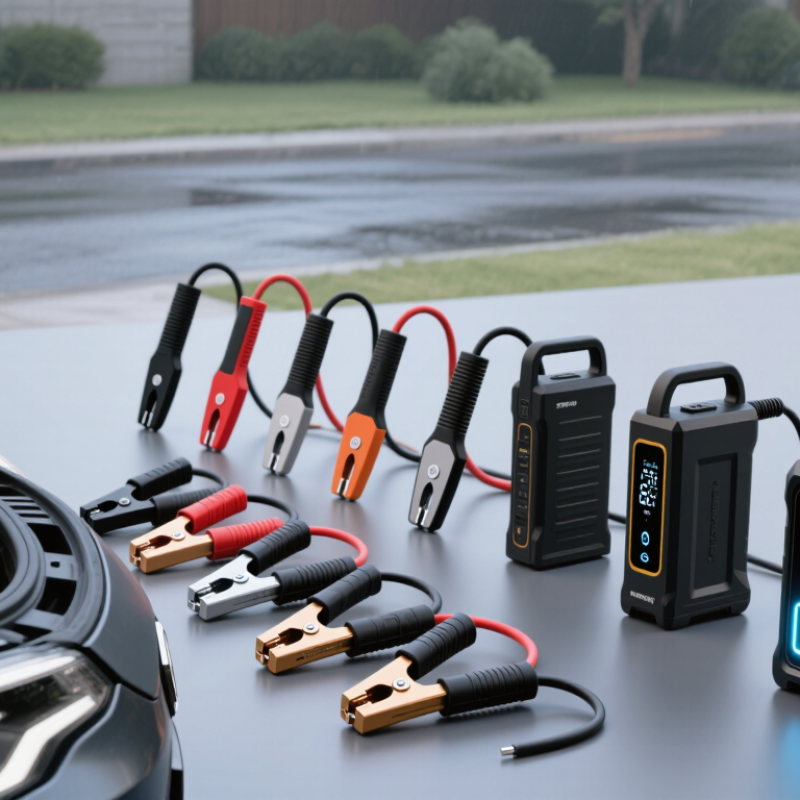
Top 10 Best Car Battery Jumpers to Buy in 2026

What Car Battery Jump Starters Are and How They Work

A car battery jump starter is a portable power pack designed to deliver a short burst of electricity to a vehicle’s starter motor. It differs from a charger, which replenishes a battery gradually. A jumper’s job is narrower: provide enough current for the engine to turn over. That distinction matters.

Most units contain a rechargeable lithium battery, heavy-duty cables, and clamps. Connect the red clamp to the positive terminal and the black clamp to the specified ground point or negative terminal, following the vehicle and starter instructions. The pack then supplies power through the cables while you start the engine. Keep the clamps apart, and never guess at terminal polarity. Some models include safeguards, but protection features are not a substitute for careful connections.

In practice, small details matter. A pack left in a cold trunk may have less usable power, and a badly depleted or damaged vehicle battery may not respond. Not magic, though. Check that the starter is charged and rated for your engine, switch off accessories, and work in a ventilated area. After the engine starts, disconnect the clamps in the order specified by the manufacturer. The jump starter does not repair the battery or prove it is healthy; if the car repeatedly needs a boost, have its battery and charging system tested.

Key Features to Compare Before Buying a Jump Starter

When comparing a car jump starter, match its starting output to your vehicle’s engine size and the conditions where you drive. Cold mornings can make engines harder to start, so a little reserve capacity is useful. Peak-amperage figures alone do not tell the whole story. Check the maker’s recommended engine range and look for clear instructions. Numbers can mislead.

Tips: Look for reverse-polarity and short-circuit protection, plus clamps that grip battery posts firmly. A built-in light helps when you’re working in a dim parking space. Check whether the unit holds charge for months or needs frequent topping up.

Portability matters, too. A compact unit is easier to store, but tiny cables may be awkward to position around a crowded engine bay. Compare cable length, clamp quality, charging time, and battery capacity. If you also want to charge a phone, check the available output ports and whether using them reduces the power left for starting. Read the vehicle manual before connecting anything, and inspect the starter’s instructions for temperature and storage limits. A polished feature list can still leave questions; real usefulness depends on clear specifications and safe, practical handling.

Top 10 Best Car Battery Jumpers to Buy in 2026

Key Feature to Compare: Peak Current by Vehicle Type

These ranges are general shopping guidance, not guaranteed starting requirements. Check your vehicle manual and the jump starter’s specifications; cold weather, engine condition, and peak-current rating methods can affect performance.

The Top 10 Car Battery Jump Starters to Buy in 2026

The top 10 car battery jump starters to buy in 2026 should be judged by more than peak-amp claims. AAA reported more than 30 million roadside-assistance calls in 2022, with dead batteries a familiar reason drivers need help. That scale makes a dependable backup useful, but it does not mean every portable unit suits every car. Check your vehicle manual for engine requirements and compare them with the starter’s stated compatibility. Cold mornings matter. A unit that works well in a compact car may struggle with a larger engine or a deeply discharged battery.

For a practical shortlist, prioritize clear safety protections, sturdy clamps, readable charge indicators, and a case that fits securely in the trunk. Independent testing should show repeatable starting performance, not just a dramatic peak-current figure; manufacturers may measure peak output differently. The best options also explain how often to recharge the pack and how it performs in low temperatures.

Keep expectations realistic. A jump starter cannot fix a failed battery, damaged cables, or an underlying charging-system fault. Rankings are useful starting points, not a substitute for checking the specifications against your vehicle. One detail is easy to overlook: a neglected jump pack may be flat when you finally need it.

How the Leading Jump Starters Differ in Performance and Value

A useful comparison starts with cold-weather performance, not the largest number printed on a case. AAA’s cold-weather guidance reports that a car battery can lose about 60% of its strength at 0°F, while an engine may need nearly twice the starting current. That makes a jump starter’s stated peak amps only part of the story. Check its rated starting output, operating temperature, and whether the maker explains how long it can sustain that output. Real starts vary.

Value also depends on how easily the unit works beside a cold, dimly lit engine bay. Clear clamp markings, reverse-polarity protection, and a charge indicator can matter more than extra accessories. A compact model is easier to store, but a small battery may offer fewer attempts between charges. Compare usable capacity and recharge time, not just the advertised number of jump starts. Some specifications are hard to compare directly.

For a fair shortlist, match the starter to the vehicle’s engine size and battery type, then compare warranty terms and safety features. Battery Council International describes CCA testing at -18°C: a 12-volt battery must maintain at least 7.2 volts for 30 seconds. Portable jumpers are not always rated under the same conditions, so their amp figures may not translate neatly. That’s the catch. Published specs help narrow choices, but they cannot guarantee a first-try start after years of storage or in severe cold.

Top 10 Best Car Battery Jumpers to Buy in 2026 - How the Leading Jump Starters Differ in Performance and Value

A brand-free comparison of common jump-starter types. Figures below are indicative ranges found across products in each category, not specifications for a particular unit. Peak-current ratings are not standardized, so compare engine guidance, safety protections, and warranty terms as well as the advertised amperage.

Option Typical advertised peak current Best suited to Common design and features Main advantage Main trade-off
1. Compact lithium-ion pack About 500–1,000 A Small gasoline cars and occasional emergency use Small, rechargeable pack; usually includes reverse-polarity and short-circuit protection Light and easy to store in a glove box or small kit Limited reserve and less suitable for large engines or repeated starts
2. Everyday mid-capacity lithium pack About 1,000–2,000 A Most small and midsize gasoline vehicles; check the maker's engine-size guidance Portable battery pack, clamp leads, and often USB charging ports A practical balance of size, price, and starting capability Advertised peak current alone does not guarantee performance in cold weather
3. High-output lithium pack About 2,000–3,000 A Larger gasoline vehicles and some light-duty diesel applications, subject to the product rating Higher-output cells, heavy-duty clamps, and electronic protection circuitry More starting headroom while remaining portable Typically costs more and may be bulkier than basic packs
4. Heavy-duty lithium pack About 3,000–5,000 A Large engines when the specific unit is explicitly rated for them Higher-capacity pack, robust leads, and commonly a status display or work light Useful for demanding applications without a wheeled unit Ratings and real-world results vary considerably; verify engine compatibility carefully
5. Lithium pack with air compressor Often about 1,000–2,000 A Drivers who also want a portable tire inflator Jump leads plus a 12 V compressor, hose, and pressure gauge or digital display Combines two roadside tools in one unit Heavier and more complex; compressor duty cycle and inflation speed matter
6. Lithium pack with larger reserve capacity Commonly about 1,000–2,500 A Frequent travel, multiple devices, or more than one starting attempt between charges Often around 15,000–25,000 mAh as stated by the manufacturer; may include USB outputs More stored energy for accessories and repeated use Capacity figures may use different cell-voltage conventions and are not directly comparable
7. Ultracapacitor jump starter Varies by design; compare the maker's vehicle compatibility rating Drivers who prefer a unit that can draw energy from a weak vehicle battery or an auxiliary source Stores energy in capacitors rather than a conventional rechargeable lithium battery Can recharge quickly when a suitable energy source is available Usually has little stored energy for USB charging and may need a minimum input voltage
8. Lead-acid portable booster Often about 1,000–2,000 A, depending on rating method Garages, workshops, or users who value a conventional, high-capacity battery design Sealed lead-acid battery, heavy cables, and frequently a built-in voltmeter or work light Robust format with substantial stored energy in many models Much heavier than lithium alternatives and needs periodic charging
9. Wheeled workshop booster Commonly rated around 1,500–3,000 A; check cranking and peak ratings separately Home garages and service bays where portability by hand is less important Large battery, long cables, wheels, and often a mains charger Long leads and a large reserve suit repeated workshop use Bulky and inconvenient to keep in a passenger car
10. Professional high-duty booster Manufacturer-dependent; some units list ratings above 3,000 A Commercial fleets and frequent service work, only when matched to the vehicle Heavy-duty cables and clamps; may use a large lead-acid battery or a high-output lithium system Designed for more demanding and frequent use than a basic emergency pack Higher cost and weight; confirm duty cycle, charging requirements, and service support

Buying note: Choose a 12 V unit explicitly rated for your vehicle's engine type and size. Check reverse-polarity protection, over-temperature protection, cable quality, operating-temperature limits, and recharge instructions. A jump starter is for starting a compatible vehicle, not for repairing a failing battery.

How to Choose the Right Jump Starter for Your Vehicle

Top 10 Best Car Battery Jumpers to Buy in 2026

Choosing a jump starter begins with your vehicle, not the largest number on a product box. Check whether your car uses a 12-volt battery, then compare the starter’s recommended engine size and peak current with your owner’s manual. Diesel engines and larger engines often need more starting power. Cold mornings can make a weak battery harder to restart, too. A compact unit may suit a small car, but it could struggle with a larger vehicle. Fit matters.

Tips: Check the clamp design, cable length, and reverse-polarity protection. Look for clear status lights and a charge indicator. Keep the unit charged, and read its instructions before an emergency. Simple details matter.

Consider how you will store and use the device. A small trunk compartment favors a lighter model, while frequent travel may call for a sturdy case and dependable battery capacity. Confirm that the unit can be recharged with a cable you can actually access. Some jump starters include lights or USB ports, but these extras should not outweigh reliable starting performance. I would not assume a high advertised peak-current figure guarantees an easy start; specifications and real conditions differ. Follow the vehicle manual, connect clamps only to the designated points, and stop if cables or the battery appear damaged.

Contact Details

Address:

Solar Pump Solutions,
Borrisokane, Co. Tipperary, Ireland.

Phone:

+353 86 1216312

Email:

sale@desasolar.com

Connect with us

Scroll to Top
Solar Pump Solutions
Privacy Overview

This website uses cookies so that we can provide you with the best user experience possible. Cookie information is stored in your browser and performs functions such as recognising you when you return to our website and helping our team to understand which sections of the website you find most interesting and useful.