
Explore the Benefits of 48 Volt Lithium Battery for Global Buyers

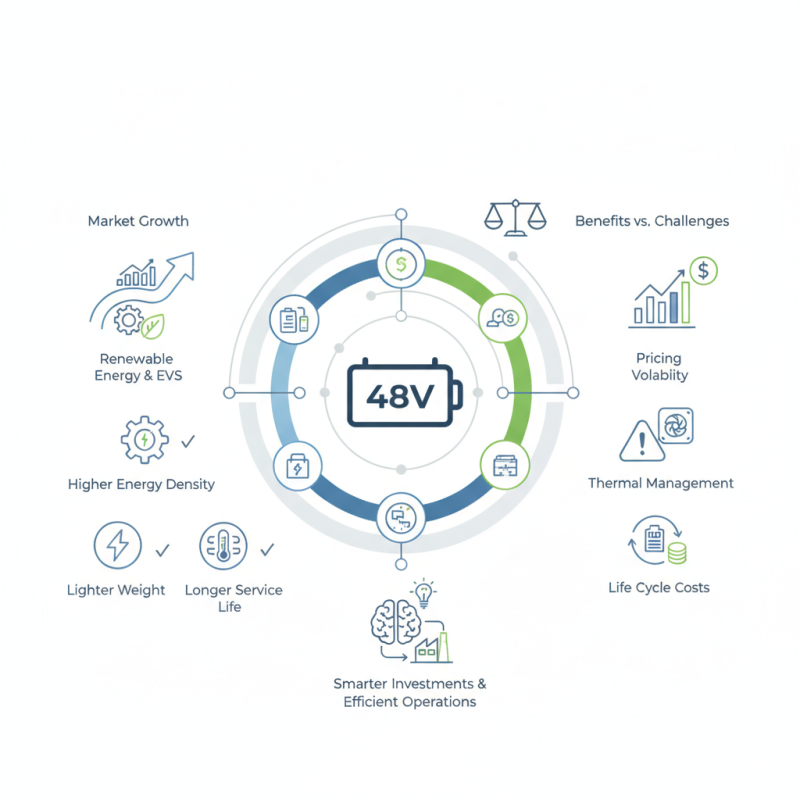
The rise of the 48 Volt Lithium Battery has transformed energy storage and management systems globally. In recent years, the demand for efficient battery solutions has surged, with reports indicating a projected market growth of 15% annually. This growth reflects the wider adoption of advanced technologies in electric vehicles, renewable energy systems, and industrial applications.

The 48 Volt Lithium Battery offers distinct advantages over traditional lead-acid batteries, including higher energy density, lighter weight, and longer service life. It is crucial for manufacturers and global buyers to consider these benefits as they strive to meet stricter regulations on emissions and sustainability. However, pricing volatility remains a challenge for buyers, necessitating careful market analysis.

Moreover, while the 48 Volt Lithium Battery presents many opportunities, potential pitfalls exist. Factors like thermal management and life cycle costs require diligent evaluation. Buyers must weigh these considerations against their specific applications to make informed decisions. A deep understanding of this technology will lead to smarter investments and more efficient operations in the long term.
Explore the Benefits of 48 Volt Lithium Battery for Global Buyers

Understanding 48 Volt Lithium Battery Technology and Its Advantages

The 48-volt lithium battery technology is gaining traction in various industries. This innovative power source is particularly well-suited for electric vehicles, renewable energy systems, and backup power applications. Transitioning to 48 volts increases efficiency by reducing losses compared to traditional 12-volt systems. According to a recent report by Research and Markets, the global 48V automotive battery market is projected to reach $10 billion by 2025.

A critical advantage of 48-volt systems is their weight-to-power ratio. These batteries provide a higher power output while maintaining a manageable size. Moreover, they allow for faster charging times. Studies show that 48-volt batteries can reduce charging times by nearly 50%, which is crucial for electric vehicles. This rapid charging capability can improve user experience significantly.

Tips: Consider the thermal management of your battery system. Proper heat dissipation can optimize performance and longevity. Additionally, always monitor the state of charge and discharge rates. Neglecting these factors can lead to reduced efficiency and battery life. Reflecting on the integration of this technology, manufacturers may face challenges in terms of compatibility and infrastructure. Addressing these issues is vital for successful implementation.

Key Advantages of Using 48 Volt Lithium Batteries in Various Applications

The rise of 48-volt lithium batteries is transforming various industries. These batteries offer significant advantages in energy efficiency and performance. According to a recent market analysis, the global 48V battery market is projected to reach $18 billion by 2024. This growth is driven by the need for more efficient energy solutions in vehicles and renewable energy applications.

One key advantage of 48-volt lithium batteries lies in their compact design. They provide a higher power output while reducing weight. For instance, these batteries can efficiently support hybrid systems in electric vehicles, resulting in better acceleration and lower emissions. They deliver up to 90% efficiency in energy conversion. This performance could revolutionize transportation and power systems.

However, the shift to 48-volt systems has challenges. There is a learning curve for manufacturers and buyers alike. Adapting infrastructure to support this technology can be complex. Additionally, the initial investment might deter some businesses despite long-term savings. Understanding these nuances is crucial for informed decision-making. The potential is huge, but so is the need for careful consideration in its implementation.

Comparative Analysis: 48 Volt Lithium Batteries vs. Traditional Battery Types

The rise of 48 volt lithium batteries has sparked interest among global buyers. These batteries stand out against traditional lead-acid ones. They are lighter, more efficient, and have a longer lifespan. A key benefit is their ability to deliver higher power output in a compact size.

In comparison, traditional batteries often struggle with energy density. They require more space and weight for the same energy. Lithium batteries charge faster, too. This can lead to significant downtime reduction. However, potential users should consider cost. The initial investment is often higher, but savings over time can be rewarding.

Charging cycles also vary. Lithium batteries can endure more cycles before capacity fades. In contrast, leading to performance issues in traditional options. This aspect alone makes lithium batteries a compelling choice. However, the rapid advancement of technology means more research is essential. Keeping up with innovations is crucial and sometimes challenging. Understanding these differences is vital when making decisions about power storage solutions.

Explore the Benefits of 48 Volt Lithium Battery for Global Buyers - Comparative Analysis: 48 Volt Lithium Batteries vs. Traditional Battery Types

Battery Type Voltage Energy Density (Wh/kg) Cycle Life (Number of Cycles) Charging Time (Hours) Temperature Range (°C) Weight (kg) Cost (USD)
48 Volt Lithium Battery 48V 200 2000 1-2 -20 to 60 30 600
Lead Acid Battery 12V 30 300-500 8-12 0 to 50 40 200
Nickel-Cadmium Battery 1.2V 50 1000 1-2 -20 to 45 25 400
NiMH Battery 1.2V 100 500 3-4 0 to 60 30 300

Cost Efficiency and Long-Term Savings with 48 Volt Lithium Batteries

The adoption of 48-volt lithium batteries is on the rise, attracting global buyers due to their cost efficiency. According to a report by the International Energy Agency, lithium batteries are expected to reduce energy costs by up to 30% over traditional lead-acid options. This is a significant factor for industries considering long-term investments, especially in renewable energy sectors.

In practical terms, these batteries offer better performance and longevity. Reports indicate that a 48-volt lithium battery typically lasts up to 10 years with proper maintenance. This longevity translates into fewer replacements and lower overall costs. However, initial investments can be higher. Consumers must evaluate this upfront expenditure against potential long-term savings.

The efficiency of these batteries also reduces energy loss, enhancing overall system performance. Studies reveal an efficiency rate of around 95%, compared to 80% for older models. While the advantages are clear, some businesses may still hesitate due to the rapid technological advancements in battery technology. This uncertainty can lead to missed opportunities in energy savings. An informed decision-making process is crucial to navigate this evolving landscape effectively.

Future Prospects and Innovations in 48 Volt Lithium Battery Solutions

The 48 Volt lithium battery is gaining traction for its efficiency and versatility. Innovations are emerging, enhancing energy storage and management. These advances can support diverse applications, from electric vehicles to renewable energy systems. Many industries are looking to harness this technology.

Investing in 48 Volt systems shows promising returns. They deliver better performance and lower costs over time. Future developments could include improved charging speeds and longer cycle lives. This opens doors for global buyers seeking sustainable solutions.

Tips: Always consider compatibility before choosing a system. Check for integration with existing technologies. Research local regulations to ensure compliance. These factors can significantly affect the success of your investment.

As innovations continue, there are challenges to address. Some manufacturers struggle with consistent quality, impacting reliability. Ongoing research is crucial to overcome these hurdles and improve end-user experience. The future of 48 Volt lithium batteries looks bright yet requires thoughtful navigation.

Contact Details

Address:

Solar Pump Solutions,
Borrisokane, Co. Tipperary, Ireland.

Phone:

+353 86 1216312

Email:

sale@desasolar.com

Connect with us

Scroll to Top
Solar Pump Solutions
Privacy Overview

This website uses cookies so that we can provide you with the best user experience possible. Cookie information is stored in your browser and performs functions such as recognising you when you return to our website and helping our team to understand which sections of the website you find most interesting and useful.