What Is a 48V Electric Scooter and How Far Can It Go?
A 48v Electric Scooter uses a battery system rated at 48 volts, but that number alone cannot tell you how far it will travel. Voltage describes part of the electrical system, not the battery’s full energy capacity. For a more useful comparison, check watt-hours, often listed as Wh, alongside the manufacturer’s range estimate. Two scooters with the same voltage can deliver very different distances.
Range changes in everyday use. A heavier rider, steep hills, frequent stops, high speeds, cold weather, and underinflated tires can all reduce distance. A smooth, flat route at a steady pace may produce a better result than a demanding commute. Small details matter. Even tire pressure can affect efficiency. Published figures are useful for comparing models, but they are not a promise for every rider or route.
This guide explains what a 48-volt scooter is, how battery capacity relates to range, and what affects real-world performance. It also offers a practical way to read manufacturer claims without treating the largest number as guaranteed. Not always. Range estimates can be confusing, and test conditions are not identical across brands. The most reliable choice depends on your route, load, riding habits, and access to charging. A little skepticism helps. Before buying, compare the battery’s watt-hours, look for clear testing details, and leave room for conditions that may shorten your ride.
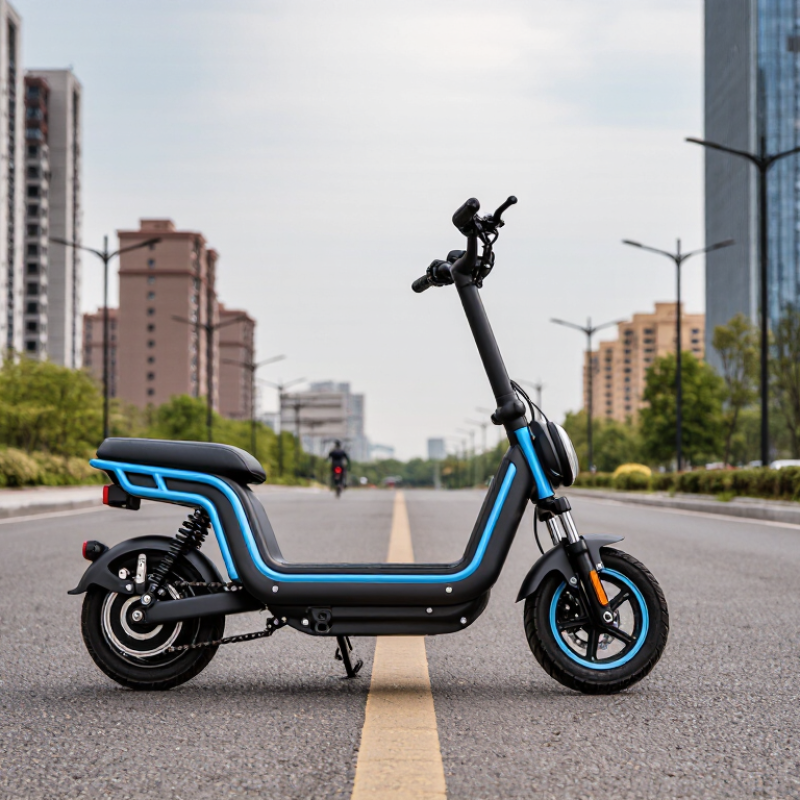
What Defines a 48V Electric Scooter?
A 48V electric scooter is defined by the nominal voltage of its battery pack. The pack supplies electrical energy to the controller, which regulates power flowing to the motor. “48V” is not a measure of battery capacity or a promise of a particular speed. Small distinction, big effect.
Capacity is commonly listed in amp-hours, or Ah. Multiply volts by amp-hours to estimate energy in watt-hours: a 48V, 15Ah pack holds about 720Wh nominally. Actual usable energy can be lower. The controller, motor, rider’s weight, tire pressure, hills, and temperature all affect consumption. A steep street can drain the battery faster than a level path. Voltage may also dip briefly when the motor works hard.
The voltage label tells only part of the story. Two scooters marked 48V may feel quite different because their controllers, motors, and battery capacities differ. Check that the charger is made for the battery’s specified chemistry and charging voltage; “48V” alone is not enough information. Range estimates deserve caution, too. They often assume gentle riding on flat ground, which may not match a real commute. The label is useful, but a little misleading when treated as the whole specification.
How Do Its Battery and Motor Work Together?
A 48V electric scooter uses a battery pack to supply electrical energy and a controller to regulate its flow. The battery’s voltage helps determine how the motor responds, but voltage alone does not tell you how far the scooter will travel. Battery capacity matters too. For example, a 48V, 15Ah pack stores about 720 watt-hours before energy losses.
The controller adjusts power as you accelerate, climb, or cruise. When the rear wheel meets a steep hill, the motor needs more current to maintain speed. That extra demand can warm components and drain the battery faster. On flat pavement, gentle throttle use usually draws less energy.
Smooth teamwork.
Range also depends on rider weight, tire pressure, temperature, terrain, and stopping frequency. A larger motor may offer stronger acceleration, but it can consume more energy when pushed hard.
The battery’s usable capacity is lower than its full rated capacity, and voltage can dip under heavy load. A neat calculation can still mislead. Check the scooter’s specifications, then treat any advertised distance as an estimate rather than a promise.
What Factors Affect a 48V Scooter’s Range?
A 48V scooter’s range depends on more than its voltage. Battery capacity matters: a 48V, 15Ah pack stores about 720 watt-hours before operating losses. A heavier rider, steep hills, strong headwinds, and repeated hard acceleration all demand more energy. So does underinflated tires; check pressure before a long ride. Small losses add up.
Temperature and battery condition matter, too. The U.S. Department of Energy reports that passenger EV range averages 12% lower at 20°F than at 75°F, and can fall further when cabin heating is used. That is useful cold-weather context, not a scooter-specific prediction: scooters have different batteries, loads, and heating demands. An older pack may also hold less usable energy than when new. Real roads are messy. A flat, mild-weather test can overstate what you’ll get on a hilly commute with frequent stops. Use the maker’s stated range as a best-case reference, then compare it with your route, rider load, tire pressure, and typical temperature.
What Is a 48V Electric Scooter and How Far Can It Go?
A 48V scooter uses a battery with a nominal voltage of 48 volts. Voltage alone doesn’t determine range: battery capacity in amp-hours (Ah) also matters. The chart estimates range for different battery capacities under three riding conditions.
How to read the chart: Estimates use nominal battery energy (48V × Ah) and illustrative energy consumption rates: 15 Wh/km for efficient riding, 20 Wh/km for typical mixed riding, and 30 Wh/km for demanding conditions. Actual range varies with rider weight, speed, hills, temperature, tire pressure, battery condition, and other factors.
How Can You Estimate Its Real-World Range?
A 48V label tells you the battery’s nominal voltage, not its range. Check the amp-hour rating, too: 48V × 15Ah equals 720 watt-hours (Wh) of nominal energy. For a practical estimate, divide usable battery energy by expected consumption per mile. If you allow 80% of that energy for riding, the example battery provides about 576Wh. At an assumed 20Wh per mile, that works out to roughly 29 miles. Treat that as a planning estimate, not a promise; the 20Wh figure is an example, not a universal scooter rating.
Your actual result depends on rider weight, hills, speed, temperature, tire pressure, and repeated stops. A cold morning, soft tires, or a long climb can noticeably reduce distance. Use the same route and riding style when comparing estimates, and leave a reserve rather than planning to drain the battery completely. NACTO’s 2023 Shared Micromobility report found an average shared e-scooter trip of about 1.4 miles. That figure describes typical trips, not a scooter’s maximum range, but it shows why short-trip data should not be mistaken for a controlled range test. For a better estimate, record battery use over several familiar rides. Real results can still be messy.
How Does 48V Compare With Other Scooter Voltages?
A 48V electric scooter sits between common 36V and 52V or 60V systems. At the same current, higher voltage can deliver more electrical power. That may support stronger acceleration or hill climbing, depending on the motor and controller. It does not guarantee a faster scooter. The parts must be designed to work together.
Voltage is only part of the comparison. Battery capacity, measured in amp-hours, matters too; multiplying volts by amp-hours gives a rough energy figure in watt-hours. For example, a 48V, 15Ah battery stores about 720Wh before losses. A 36V battery with greater capacity could store similar energy. That comparison is useful, but not perfectly tidy: real range also shifts with rider weight, hills, temperature, tire pressure, speed, and stop-and-go riding. Expect less distance on a cold, hilly route.
For range, check the scooter’s stated battery watt-hours and test conditions, not just its voltage. Then treat advertised distance as an estimate. A steady ride on flat pavement can use less energy than repeated starts on a steep street. Small details matter. Higher-voltage batteries also require compatible motors, controllers, and chargers; voltage alone is not a safe upgrade guide. A little frustrating, perhaps, but the label never tells the whole story.
What Is a 48V Electric Scooter and How Far Can It Go? - How Does 48V Compare With Other Scooter Voltages? | Nominal Voltage Class | Example Energy at 10 Ah | Illustrative Range for a 10 Ah Pack | Typical Scooter Applications | How It Compares |
| 24V | About 240 Wh | About 8–14 miles (13–22 km) | Light-duty, low-speed scooters and some compact models. | Lower voltage generally means less energy at the same amp-hour rating. Suitable range depends heavily on the battery’s capacity and the scooter’s design. |
| 36V | About 360 Wh | About 12–20 miles (19–32 km) | Many entry-level and everyday commuter scooters. | A common middle-ground system. With the same amp-hour rating, it stores less nominal energy than a 48V pack. |
| 48V | About 480 Wh | About 16–27 miles (26–43 km) | Commuter scooters, including models designed for stronger acceleration or hill performance. | Compared with 36V at the same amp-hour rating, a 48V battery has about one-third more nominal energy. Voltage alone does not determine range. |
| 52V | About 520 Wh | About 18–29 miles (29–47 km) | Some performance-oriented commuter scooters. | Offers slightly more nominal energy than 48V at the same amp-hour rating. Actual performance also depends on the motor, controller, and battery limits. |
| 60V | About 600 Wh | About 20–34 miles (32–55 km) | Higher-power scooters and some longer-range models. | Can support higher electrical power at a given current, but the scooter’s components must be designed for the voltage. |
| 72V | About 720 Wh | About 24–41 miles (39–66 km) | High-performance scooters and other specialized applications. | At the same amp-hour rating, it has more nominal energy than lower-voltage examples. A higher-voltage battery is not interchangeable unless the scooter is rated for it. |
| How to read these estimates: Energy is calculated as nominal voltage × amp-hours. The illustrative ranges assume roughly 85% of nominal energy is usable and consumption of about 15–25 Wh per mile. Real range varies with battery condition, rider and cargo weight, speed, terrain, temperature, tire pressure, and riding style. A 48V scooter’s actual range depends more directly on its battery’s watt-hours and energy use than on voltage alone. |