2026 Best Solar Water Pumps for Global Buyers

Choosing the right Solar Water Pumps in 2026 requires more than comparing prices or advertised flow rates. Buyers must examine water depth, daily demand, sunlight availability, and local installation conditions. A pump that performs well on a sunny farm may struggle near a cloudy coastline. Real performance depends on the complete system, including panels, controllers, pipes, storage tanks, and batteries.

This guide focuses on practical options for farms, homes, livestock areas, irrigation projects, and remote communities. It considers submersible and surface pumps, brushless motors, direct-drive systems, battery-supported designs, and hybrid configurations. Technical details matter. Head height, flow rate, wattage, controller protection, and dry-run resistance can determine whether water reaches a tank reliably. A stainless-steel body may also offer better durability in demanding environments. Small details matter.

Global buyers should verify certifications, warranty terms, spare-parts access, and installer support before ordering. Product claims deserve careful checking. Laboratory figures may not reflect dusty panels, voltage drops, seasonal rain, or long pipe runs. No ranking can fit every location. Even experienced reviewers can overlook a site-specific problem. That uncertainty should be acknowledged, not hidden. The best choice balances tested performance, repairability, energy efficiency, and total ownership cost. Buyers should request current technical sheets and confirm compatibility with local electrical standards. With clear measurements and realistic expectations, Solar Water Pumps can provide dependable water access while reducing fuel use and routine operating costs.
2026 Best Solar Water Pumps for Global Buyers

Solar Water Pump Basics and How the Technology Works

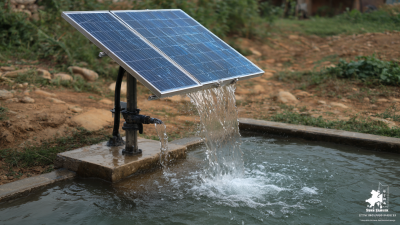
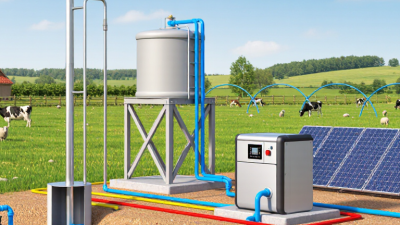
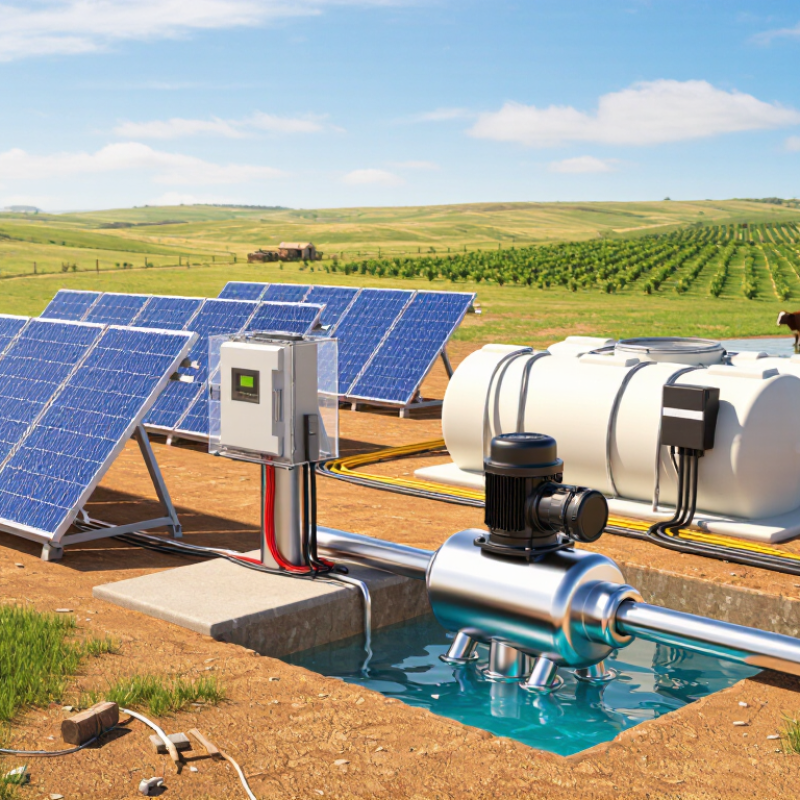
A solar water pump turns sunlight into water movement without relying on a grid connection. Solar panels produce direct-current electricity, which a controller manages before it reaches the pump motor. As sunlight grows stronger, output usually rises; passing clouds can reduce pumping. Simple systems may run directly from panels, while others use batteries to store energy for later. Batteries add cost and maintenance, so they are not always needed.

The pump lifts or pushes water through pipes to a tank, field, or livestock trough. Choosing one depends on the required flow and total pumping head: the vertical lift plus resistance from pipe length and fittings. A pump that looks powerful on paper may deliver less water at the actual site. Dusty panels, dry wells, and narrow pipes can all affect performance. Real conditions are rarely perfect.

Tips: Check the water source’s seasonal level and estimate daily demand before sizing the system. Keep panels clear of dust, and use a filter where sediment could enter the pump. Ask whether the controller includes dry-run protection. Small details matter. A basic flow test after installation can reveal problems early, though I would still recheck output as seasons change.

Key Pump Types for Irrigation, Homes, Livestock, and Industry

2026 Best Solar Water Pumps for Global Buyers

Solar water pumps now serve more than remote farms. For irrigation, submersible pumps lift water from wells, while surface pumps draw from ponds or tanks. Direct solar systems work during daylight and suit crop watering. Battery-assisted systems provide steadier supply when clouds arrive. For homes, compact booster pumps can improve pressure for showers, kitchens, and rooftop storage.

Livestock systems need dependable trough filling and simple maintenance. A float valve can stop overflow, but dusty water may still block the intake. Industrial sites require stronger pumps, corrosion-resistant materials, and careful flow control. Mining support, greenhouse cooling, and process-water transfer may need centrifugal or multi-stage designs. Pump selection should match head height, daily volume, pipe length, and seasonal sunlight. A larger pump is not always better. It can waste water and raise installation costs.

Tips: Measure the well level in dry months, not only after rain. Add a filter before the pump when sediment is visible. Ask for performance data at your actual lift height. Inspect cables, seals, and controllers regularly. Even good calculations can miss shading from a new building or tree. Leave room for that uncertainty.

How to Compare Solar Pump Performance, Quality, and Total Cost

For global buyers, comparing solar water pumps requires more than reading the maximum flow rate. Performance depends on water depth, pipe length, sunlight, and daily demand. A pump rated for 8,000 liters per hour may deliver far less from a deep well.

Ask suppliers for performance curves, not isolated numbers. Check flow at your required head, including friction losses in long pipes. A reliable controller should manage changing sunlight and protect against dry running, overload, and low voltage. Test results from realistic conditions are more useful than laboratory claims.

Quality appears in small details. Inspect stainless steel grades, cable insulation, seals, connectors, and controller ventilation. Request inspection records, clear installation instructions, spare-part availability, and a written warranty. Independent testing or recognized safety documentation can strengthen confidence, but paperwork cannot replace practical evidence.

Total cost includes panels, mounting frames, wiring, pipes, transport, installation, cleaning, and future repairs. A cheaper pump may consume less money today but more time later. Compare energy output across seasons and estimate replacement costs over five years. In field evaluations, a spreadsheet can still mislead when sunlight or water demand changes. Leave some capacity for dry months. Even careful sizing is imperfect.

Regional Buying Factors for Global Solar Water Pump Projects

2026 Best Solar Water Pumps for Global Buyers

Regional Buying Factors for Global Solar Water Pump Projects

Solar water pump selection changes sharply by region. The IEA’s Renewables 2024 report expects solar power capacity to expand rapidly through 2030. However, strong sunlight alone does not guarantee reliable pumping. In East Africa, buyers should check dry-season water depth, dust exposure, and transport access. A pump may need corrosion-resistant materials and simple field servicing.
In South Asia, irrigation demand, groundwater rules, and seasonal monsoons influence system sizing. India’s agricultural solarization programs show the importance of matching pump output with farm size and grid conditions. In the Middle East, high temperatures can reduce motor performance and increase cooling needs. The World Bank’s Global Solar Atlas also shows major differences in daily solar resources between nearby regions.
Tips:
Measure the water level at the end of the dry season. Request a pump curve, not only a power rating. Confirm spare-part availability before installation. Ask for performance data at your local solar irradiation level.

For remote projects, logistics may matter more than a slightly higher efficiency rating. A technician carrying a replacement controller across rough roads needs practical access. The FAO highlights irrigation efficiency as a key factor in water-scarce agriculture, yet real sites often have leaking pipes and poorly measured wells. That weakness deserves attention.

Some project forecasts remain too optimistic. Include storage capacity, livestock demand, and cloudy-day performance in the purchasing calculation.

Installation, Maintenance, Safety, and 2026 Market Trends

Installing a solar water pump in 2026 requires more than matching panel wattage to pump power. I have found that water depth, pipe length, daily demand, and seasonal sunlight determine real performance. A site survey should measure the well level during dry periods. My first sizing estimate once failed because I used the rainy-season water level.

Mount panels toward the strongest local sunlight, with a clear view from late morning to mid-afternoon. Use a rigid frame, weather-resistant cable glands, and properly grounded electrical equipment. Keep the controller above expected floodwater. Install a filter before the pump when sand is visible. Small particles can damage moving parts quickly. Leave access for cleaning and inspection.

Maintenance should include monthly checks for loose connections, cracked insulation, unusual vibration, and reduced flow. Clean dusty panels with soft water and a non-abrasive cloth. Never touch exposed wiring with wet hands. A qualified electrician should verify protective devices and local electrical compliance. Safety procedures are not optional.

In 2026, buyers are increasingly comparing remote monitoring, battery-free designs, and efficient brushless motors. Remote data can reveal falling water levels before a failure occurs. However, digital features may add repair costs and require stable communications. Simpler systems can be more dependable in remote areas. Warranty terms, spare-part availability, and installer training deserve equal attention. The cheapest purchase may become expensive after one neglected season.

2026 Best Solar Water Pumps for Global Buyers — Installation, Maintenance, Safety, and Market Trends
Pump Type Best-Fit Applications Indicative Operating Range Installation Priorities Maintenance Safety Checks 2026 Buyer Considerations
Surface centrifugal pump Shallow wells, tanks, ponds, and open water where the pump can be installed close to the source. Common configurations range from about 1–20 m³/h flow and 5–50 m total head. Actual flow depends on the pump curve and system conditions. Keep the pump near the water source. Practical suction lift is generally limited to about 6–7 m at sea level and can be lower at altitude. Use a properly sized suction line and foot valve where required. Check the inlet strainer, seals, and pipe connections. Keep the pump and solar modules clear of dirt and vegetation. Protect electrical connections from water and isolate the system before service. Never run the pump dry unless the model is designed for it. Useful where access for service is important. Confirm suction lift and total dynamic head rather than choosing by rated flow alone.
Submersible centrifugal pump Deep wells, boreholes, and water transfer from sources where the pump must operate underwater. Product ranges commonly span roughly 0.5–20 m³/h and 20–200 m head, with flow and head strongly dependent on pump size and operating point. Match the pump diameter to the well casing. Suspend it securely, keep it clear of sediment, and follow the required submergence and cooling conditions. Inspect cables, controls, and water quality periodically. Check for falling well yield, sand, or sediment that could increase wear. Use suitable overload and dry-run protection. Ground and bond equipment as required by local electrical rules; isolate power before lifting the pump. Often a practical choice for deeper sources. Compare performance curves at the site’s required head and seasonal water level.
Helical-rotor (progressive-cavity) pump Low-yield boreholes, remote livestock watering, and applications requiring relatively high lift at modest flow. Many small systems deliver about 0.1–3 m³/h at approximately 30–150 m head; exact limits vary substantially by rotor, stator, and motor design. Install to the specified depth and ensure the pump is protected from abrasive sand. Use a controller compatible with the motor and pump design. Monitor flow and current for gradual performance changes. Abrasive water can wear the rotor and stator and may shorten service life. Provide dry-run protection and follow the manufacturer’s limits for starts, voltage, and operating temperature. Consider when high head matters more than high volume. Check replacement-part availability and the effect of sand on lifecycle cost.
Diaphragm or other positive-displacement pump Small water supplies, dosing, and low-flow applications where a steady volume per cycle is useful. Small solar units often operate around 0.1–1.5 m³/h and 10–70 m head; these are indicative ranges, not guaranteed output figures. Use clean-water filtration where required and install any pressure relief or check valves specified for the system. Inspect valves, diaphragms, filters, and seals. Replace wear parts according to condition and the operating environment. Prevent operation against a closed discharge unless the pump has appropriate pressure protection. Isolate power before opening the pump. Can suit low-volume duties. Verify the allowable water quality and expected service intervals before purchase.
Solar pump with battery storage Sites that need water outside solar production hours or require electrical backup for a critical duty. Output depends on the pump, battery capacity, solar resource, and daily water demand; there is no universal flow range for this system type. Size the PV array, battery, charge controller, and pump as one system. Provide ventilation and weather protection appropriate to the battery chemistry. Follow battery-specific inspection and replacement guidance. Check terminals, enclosures, and system performance regularly. Use battery protection and correctly rated fuses or breakers. Prevent short circuits and follow local rules for battery storage and disposal. Compare battery replacement cost with water storage. A water tank can often provide storage with fewer electrical components.
Hybrid solar pump with grid or generator input Sites with variable sunlight, seasonal demand, or a need for backup power during low-solar periods. Capacity is determined by the selected pump and available power sources. Confirm that the controller supports the intended PV and backup-input configuration. Have the electrical design checked for correct switching, protection, grounding, and compatibility between power sources. Inspect PV wiring and backup equipment. Service the generator or grid-side equipment according to its own requirements. Prevent unsafe back-feeding and use suitable isolation and overcurrent protection. Electrical work should follow local codes and be performed by qualified personnel. Hybrid systems can improve operational flexibility, but add controls and installation complexity. Compare backup fuel or electricity costs with water-storage options.
Reading the ranges: Figures are broad examples of commonly available system classes, not specifications for a particular pump. Flow decreases as required head increases; final selection should use the pump performance curve, total dynamic head, water quality, daily demand, and local solar conditions.

Contact Details

Address:

Solar Pump Solutions,
Borrisokane, Co. Tipperary, Ireland.

Phone:

+353 86 1216312

Email:

sale@desasolar.com

Connect with us

Scroll to Top
Solar Pump Solutions
Privacy Overview

This website uses cookies so that we can provide you with the best user experience possible. Cookie information is stored in your browser and performs functions such as recognising you when you return to our website and helping our team to understand which sections of the website you find most interesting and useful.