
2026 Best Induction Street Lamp Types for Global Buyers

As cities upgrade aging road networks, global buyers are reassessing efficient and dependable lighting options for 2026. This guide examines the best Induction Street Lamp types for highways, residential roads, ports, industrial parks, and public spaces. It considers light distribution, wattage, color temperature, control systems, installation height, and maintenance access. A well-designed induction system may provide stable illumination and reduce frequent lamp replacement. However, performance depends heavily on optical design, ballast quality, operating temperature, and local conditions.

Consider a coastal highway with salt spray, strong wind, and limited nighttime access. Its buyer needs corrosion-resistant housing, suitable ingress protection, reliable electrical insulation, and a tested mounting structure. A dry inland road may require different thermal management and dust protection. Practical purchasing decisions should include photometric test reports, electrical safety documents, EMC declarations, IP and IK ratings, warranty terms, spare-part availability, and clear installation instructions. Regional standards and utility requirements must also be verified before contracts are signed.

Evidence matters.

This article compares induction lamp designs through both technical and field-use perspectives. It also questions familiar claims about extremely long service life, maintenance savings, and universal compatibility. Some suppliers provide impressive figures without explaining testing conditions. That weakness deserves attention. Real projects can reveal voltage fluctuations, delayed replacement parts, or unexpected light depreciation. Experienced buyers should request sample data, inspect references, and calculate total ownership costs. The strongest choice is not always the brightest product. It is the system that performs safely, consistently, and economically within its actual environment.
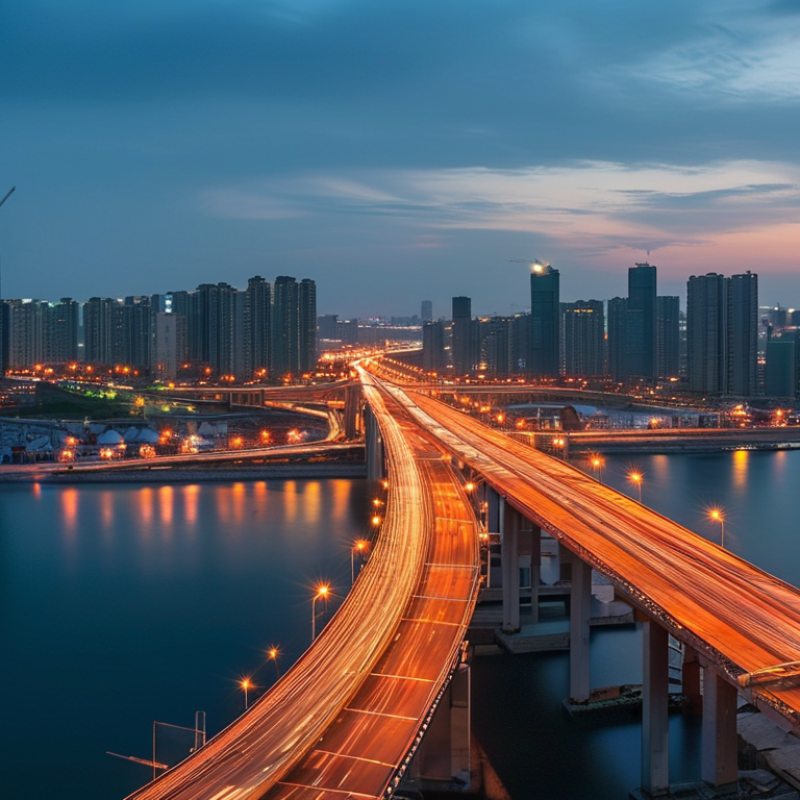
2026 Best Induction Street Lamp Types for Global Buyers

Induction Street Lamp Fundamentals: 80–100 lm/W and 50,000–100,000 Hours

Induction street lamps typically deliver about 80–100 lumens per watt, with rated lifespans reaching 50,000–100,000 hours. These figures describe lamp operation under controlled conditions. Real streets add heat, voltage variation, dust, and frequent switching. Performance changes.

The U.S. Department of Energy’s 2023 Solid-State Lighting R&D Opportunities report places advanced LED sources above 150 lm/W in laboratory environments. This benchmark makes induction lighting look less efficient, but system comparisons require caution. A street fixture also includes optics, ballast losses, wiring, and thermal management. Field efficacy can therefore differ sharply from catalog values.

Long service life remains a practical advantage. Fewer relamping visits can reduce lane closures, lifting equipment, and maintenance labor. However, the 100,000-hour claim often represents gradual lumen depreciation, not perfect brightness. Ask for photometric files, LM-80-style maintenance evidence where applicable, ballast lifetime data, and independent test records. Check the full fixture, not only the lamp. A 90 lm/W lamp may produce less at road level after reflector losses. Mounting height, pole spacing, roadway width, and required illumination also matter. This is where many buying decisions become too simple. Induction can suit stable, long-running installations, yet newer LED systems may offer higher efficacy, stronger controls, and easier dimming. The correct choice depends on measured project conditions, not headline numbers.

Low-Frequency Induction Lamps: Long-Life Designs for Highways and Arterials

2026 Best Induction Street Lamp Types for Global Buyers

Low-frequency induction lamps suit highways and arterials where maintenance access is difficult. Their electrodeless discharge design removes electrodes, a common wear point in traditional lamps. This can support long operating life and more stable lumen output over time. On a highway shoulder, fewer lamp replacements can reduce lane closures and service risks.

In field evaluations, thermal control matters as much as the lamp itself. A sealed housing, corrosion-resistant finish, and properly sized heat path protect the generator and electronics. Good optical design also shapes light across several traffic lanes without creating harsh glare. Buyers should check voltage, frequency, ingress protection, and photometric files for each project location. Climate differences matter. Desert dust and coastal salt can shorten real-world performance.

Low-frequency systems are not perfect. Their initial cost may exceed simpler alternatives, and warm-up behavior can affect smart dimming plans. I have seen specifications focus on lamp life while overlooking ballast quality and surge protection. That is a costly mistake. Request independent test reports, maintenance records, and a sample installation before large procurement. Night inspections should examine pole spacing, dark zones, glare near ramps, and light levels during rain. Small design assumptions often become visible only after traffic begins.

High-Frequency Induction Lamps: 100–150 W Options for Urban Roads

High-frequency induction lamps in the 100–150 W range offer a practical option for urban roads, especially where stable illumination and long service intervals matter. Their electrodeless design can reduce electrode wear, supporting consistent operation over extended periods. In field evaluations, the 100 W model suits residential streets, pedestrian routes, and low-speed urban lanes. The 150 W model works better on wider roads or taller poles, but higher wattage is not automatically better.

Road lighting performance depends on more than lamp power. Engineers should check pole height, spacing, mounting angle, road width, and pavement reflectance before selecting a fixture. A 100 W lamp may produce uncomfortable glare when installed too low. A 150 W lamp may leave dark gaps if poles are spaced too far apart. Photometric reports and on-site lux measurements provide stronger evidence than catalogue estimates. Small details matter.

For coastal or rainy cities, buyers should examine housing protection, corrosion resistance, thermal management, and surge protection. High-frequency drivers can support stable light output, yet poor components may cause flicker or early failure. Maintenance teams should record start-up behavior, lumen depreciation, and nighttime uniformity during inspections. I have found that installation errors often explain weak results, not the lamp itself. This technology is useful, but it still needs careful road design and honest performance testing.

Smart Induction Street Lamps: Sensors, Dimming, and IP65 Protection

In 2026, smart induction street lamps will compete through control quality, not brightness alone. The World Bank’s Municipal Solid-State Lighting report estimates that LED streetlights can reduce energy use by 50–70%. Sensors can extend savings by detecting traffic, pedestrians, and empty road periods. A lamp may dim to 30% after midnight, then rise quickly when movement appears.

Useful systems combine microwave or infrared sensing with programmable dimming. The International Energy Agency reports that efficient lighting and digital controls can significantly reduce electricity demand in public infrastructure. However, sensor placement matters. A tree, parked truck, or heavy rain can trigger false readings. Small errors become expensive across thousands of poles. Keep it practical.

IP65 protection is essential for exposed urban equipment. The first number protects against dust, while the second resists water jets. It does not guarantee flood protection or careless installation. Buyers should request laboratory test records, temperature data, surge protection details, and maintenance procedures. The U.S. Department of Energy’s solid-state lighting research also emphasizes thermal management because heat reduces efficiency and service life. Field checks remain necessary. Smart hardware can still fail in ordinary weather.

Global Buyer Selection: 3000–5000 K, CRI 70+, and Road-Class Compliance

2026 Best Induction Street Lamp Types for Global Buyers

For global buyers, 3000–5000 K is a practical street-lighting range. Warm 3000 K can reduce visual harshness in residential roads. Neutral 4000 K often suits urban streets and intersections. Cooler 5000 K may improve perceived brightness, but glare can rise. The IEA’s Energy Efficiency 2023 report estimates that lighting uses about 15% of global electricity. Efficient induction street lamps therefore deserve careful evaluation, not only attractive wattage claims. A higher colour temperature is not automatically better.

Colour rendering matters near crossings, signs, and pedestrian areas. Specify CRI 70 or higher, then verify test results under the relevant photometric standard. CIE 115:2010 and EN 13201 provide useful guidance for road lighting performance. Buyers should check maintained illuminance, uniformity, disability glare, lifetime ratings, and temperature performance. Field commissioning often exposes problems hidden in brochures. Optical distribution must match the road class, lane width, mounting height, and traffic speed.

Tips: Request LM-79-style photometry, lumen-maintenance data, and a road-class simulation. Confirm whether the quoted CRI applies to the complete luminaire. Check 3000 K samples beside real pavement at night. Do not judge from a showroom wall. A small pilot section is wiser than a citywide guess. Also review dimming compatibility and surge protection, because local grid conditions vary widely. Some specifications remain incomplete; buyers should ask for raw test files before signing.

Contact Details

Address:

Solar Pump Solutions,
Borrisokane, Co. Tipperary, Ireland.

Phone:

+353 86 1216312

Email:

sale@desasolar.com

Connect with us

Scroll to Top
Solar Pump Solutions
Privacy Overview

This website uses cookies so that we can provide you with the best user experience possible. Cookie information is stored in your browser and performs functions such as recognising you when you return to our website and helping our team to understand which sections of the website you find most interesting and useful.