
2026 Best Hair Diffusers for Curly Hair

Finding the best hair diffusers for curly hair is less about chasing the biggest bowl and more about controlling airflow. A good diffuser can help curls dry with shape, reduce disruptive blasts, and make root volume easier to manage. It cannot guarantee perfect definition. Hair density, curl pattern, products, and technique all affect the result.

Curl specialist and author Lorraine Massey is often quoted saying, “Curly hair is not a trend; it’s a lifestyle.” That perspective matters here. A diffuser should fit your routine, not just look impressive on a shelf. Look for gentle, even airflow, useful heat settings, a bowl deep enough to cup curls, and a fit that works with your dryer. Small details count. A loose attachment can wobble; a shallow bowl may leave longer curls unsupported.

This guide compares diffuser designs for different curl needs, from compact travel options to larger attachments suited to longer hair. It also considers weight, noise, temperature control, and ease of cleaning. Those details are easy to overlook. They can matter on a rushed morning, when a heavy dryer strains your wrist or high heat leaves curls feeling rough. No single pick suits everyone, and product claims deserve a little skepticism. The best choice is the one that works with your dryer and helps you dry curls gently and consistently.
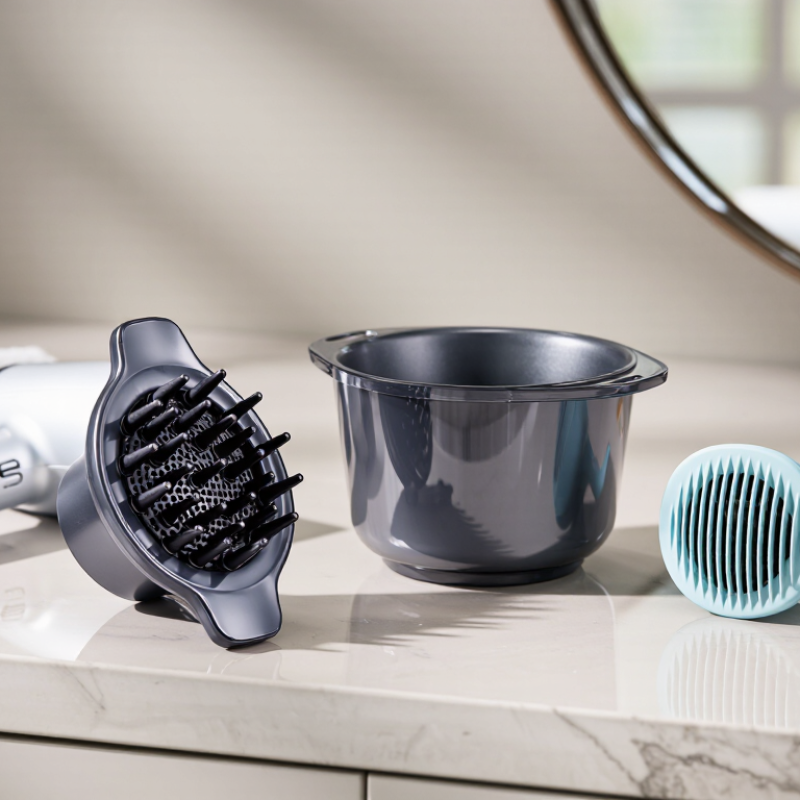
2026 Best Hair Diffusers for Curly Hair

How Hair Diffusers Dry and Define Curly Hair

A hair diffuser dries curls by spreading airflow through its bowl and prongs instead of directing one narrow stream at a small section. That gentler distribution can help reduce the force that separates wet curl clumps and creates frizz. It does not automatically reduce heat, though. Use low or medium heat, and keep the dryer moving rather than holding it close to one spot.

A 2011 study in Annals of Dermatology measured hair-dryer temperatures and found that using a dryer 15 cm from hair with continuous motion kept the measured surface temperature near 47°C. The researchers also reported greater damage with higher temperatures. This is useful context, not a universal safety threshold: hair condition, airflow, and dryer settings vary.

For definition, place the ends into the diffuser bowl, lift gently toward the scalp, and pause before moving to another section. Avoid scrunching repeatedly while curls are wet. Small adjustments matter. And patience helps; rushing often means more handling, not better shape.

The study examined hair drying broadly, not every diffuser design, so results should not be treated as a direct test of all diffusers.

Key Features That Affect Diffuser Performance

2026 Best Hair Diffusers for Curly Hair

Key Features That Affect Diffuser Performance

A diffuser’s airflow pattern can make a noticeable difference to curls. Wide, vented bowls spread air across a larger area, while deeper bowls help cradle longer curls. Prongs can lift roots, but very firm or closely spaced prongs may snag delicate strands. Fit matters, too: an attachment that wobbles can leak air and feel awkward to use. Small details count.

Heat and speed controls are just as important. Low airflow and moderate heat generally give curls more time to dry with less disturbance. Very hot air may dry the outside quickly while leaving damp sections underneath. In practice, the best setting varies with hair density, length, and the room’s humidity. I have found that one setting rarely works perfectly every day.

Main Types of Diffusers for Different Curl Needs

Diffusers shape airflow, so the right design depends on how your curls respond to drying. A bowl diffuser spreads air across a wide area, helping dense curls dry with less direct airflow. Its shallow cup can feel awkward with very long hair, though. Pronged diffusers lift roots and separate sections, which can add volume to fine curls. Use the prongs gently; pulling them through damp hair may create frizz. Sock-style diffusers soften airflow and pack easily for travel, but often dry hair more slowly.

Match the tool to your routine. For tight curls, cup a small section and hold it still near the scalp; avoid scrunching repeatedly. For loose waves, use low airflow and hover the diffuser to preserve a relaxed shape. Small details matter. If your roots stay wet, a deeper bowl or longer prongs may help. If ends feel rough, try lower heat and shorter drying intervals.

Heat control matters more than diffuser shape alone. A 2011 study in Annals of Dermatology tested 30 hair samples using natural drying and blow-drying at different temperatures, with the dryer held 15 centimeters away. Researchers observed greater surface damage at higher temperatures, while the highest-heat condition also showed damage deeper in the hair shaft. These were controlled samples, not every curl type, so treat the findings as a caution rather than a guarantee. A diffuser can soften airflow; it cannot make excessive heat harmless.

How to Choose a Diffuser for Your Hair Type and Dryer

A diffuser should suit both your curls and your hair dryer. Check the attachment’s diameter and how it fastens before buying; “universal” fittings can still slip or leave gaps. A secure fit helps keep airflow controlled. Fit matters most.

For loose waves or fine curls, choose a lightweight diffuser with a shallow bowl and shorter fingers. It can lift roots without weighing down delicate strands. Dense, coily, or longer hair may benefit from a deeper bowl and longer prongs, which can hold more hair close to the scalp. If your curls lose definition easily, look for gentle, even airflow rather than a powerful blast. The right shape depends on your section size, too.

Your dryer’s settings matter as much as the diffuser. Use low or medium heat and low airflow to limit frizz and avoid roughing up curl clumps. If the dryer has only one speed, a diffuser with a broad, vented bowl may soften the air, but it cannot change the dryer’s heat. Start with damp, not dripping, hair and move the diffuser slowly. A little trial and error is normal. Keep the attachment clean, and stop if it feels loose or unusually hot.

2026 Best Hair Diffusers for Curly Hair - How to Choose a Diffuser for Your Hair Type and Dryer

Compare common diffuser designs by curl pattern, hair length, and dryer fit. Bowl measurements below are practical selection ranges, not specifications for a particular product.

Diffuser Type Best Suited To Useful Bowl Size Prong Design Dryer Compatibility What to Look For Potential Drawback
Deep-bowl diffuser Long, thick, or dense curls; hair that needs room to be cupped without being compressed About 5–6 in (13–15 cm) across, with a deeper bowl Longer prongs help lift roots and separate dense sections Check the attachment opening and locking mechanism against the dryer nozzle A spacious bowl, rounded prong tips, and evenly distributed air outlets Can feel heavy or awkward on a compact dryer
Wide, shallow-bowl diffuser Short to medium-length curls, loose waves, or hair that dries quickly About 5–7 in (13–18 cm) across, with a shallow profile Short or medium prongs suit gentle root lifting Usually attaches to a compatible nozzle; confirm the opening diameter before buying A broad surface that lets curls rest in a single layer May not hold long hair securely while drying
Universal-fit diffuser People who want one attachment for a compatible dryer they already own Varies by design; measure the dryer nozzle rather than relying on the “universal” label Choose prong length based on hair density and desired root lift Fit depends on the nozzle’s diameter, shape, and whether it has a raised rim; check the stated fit range A secure, snug connection that does not wobble or block the dryer outlet May not fit unusually wide, tapered, oval, or non-removable nozzles
Collapsible diffuser Travel, storage in a small space, or occasional use with a compatible dryer Often more compact than a full-size bowl; check its open diameter Shorter prongs are common and may provide less root reach Confirm both attachment fit and that the diffuser stays fully extended during use Heat-resistant construction, stable folds, and a shape that does not collapse under airflow May offer less bowl capacity or stability than a rigid diffuser
Finger-prong diffuser Coils, tight curls, or dense roots where targeted lifting is useful A medium or deep bowl gives curls room to rest between prongs Long, well-spaced prongs can reach closer to the roots; use gently to avoid disrupting curl clumps Check the attachment connection and ensure the prongs do not touch the dryer outlet Smooth, rounded prongs and a balanced layout that supports sections without snagging Long prongs can tangle or disturb curls if pushed through the hair
Compact diffuser for a low-power dryer Fine or delicate curls, or users who prefer a lighter attachment and gentle airflow About 4–5 in (10–13 cm) across Short, widely spaced prongs can reduce snagging on fine strands Best matched to the dryer’s specified attachment system; avoid forcing a tight fit Low heat and low airflow settings, plus a lightweight, secure attachment Smaller capacity may make drying long or dense hair slower

Choosing tip: Measure the dryer nozzle at the point where the diffuser attaches, and check the dryer manual for compatible accessories. For curl definition, begin with low or medium airflow and low-to-medium heat; use a cool setting if available. Drying time varies with hair density, length, porosity, and room conditions.

Top Hair Diffusers for Curly Hair in 2026

Top Hair Diffusers for Curly Hair in 2026

Top hair diffusers for curly hair in 2026 should disperse airflow gently, fit comfortably over the dryer nozzle, and suit your curl routine. A wide bowl can cradle larger sections, while longer prongs may help lift roots without flattening the crown. Look for adjustable heat and airflow settings; high heat is not automatically faster or better. A removable attachment is useful for cleaning and storage. Small details matter.

For more even drying, place a section of damp curls into the diffuser bowl and bring it toward your scalp. Hold it still for several seconds before moving to another area. Low airflow can reduce disruption, though very thick hair may need more time. Keep the diffuser moving if one spot feels uncomfortably hot. Not every attachment fits every dryer, so check nozzle measurements before buying. There is no perfect ranking for every curl pattern, and comparisons can be imperfect when dryers differ. A diffuser that feels manageable in your hand may be more useful than one with impressive features you rarely use.

2026 Best Hair Diffusers for Curly Hair

Top Hair Diffusers for Curly Hair in 2026

This guide prioritizes diffuser features that support gentle, even drying: low airflow can help limit curl disruption, while a wide bowl and a secure dryer fit make it easier to cup curls. Scores are editorial selection priorities, not laboratory measurements or product test results.

Contact Details

Address:

Solar Pump Solutions,
Borrisokane, Co. Tipperary, Ireland.

Phone:

+353 86 1216312

Email:

sale@desasolar.com

Connect with us

Scroll to Top
Solar Pump Solutions
Privacy Overview

This website uses cookies so that we can provide you with the best user experience possible. Cookie information is stored in your browser and performs functions such as recognising you when you return to our website and helping our team to understand which sections of the website you find most interesting and useful.